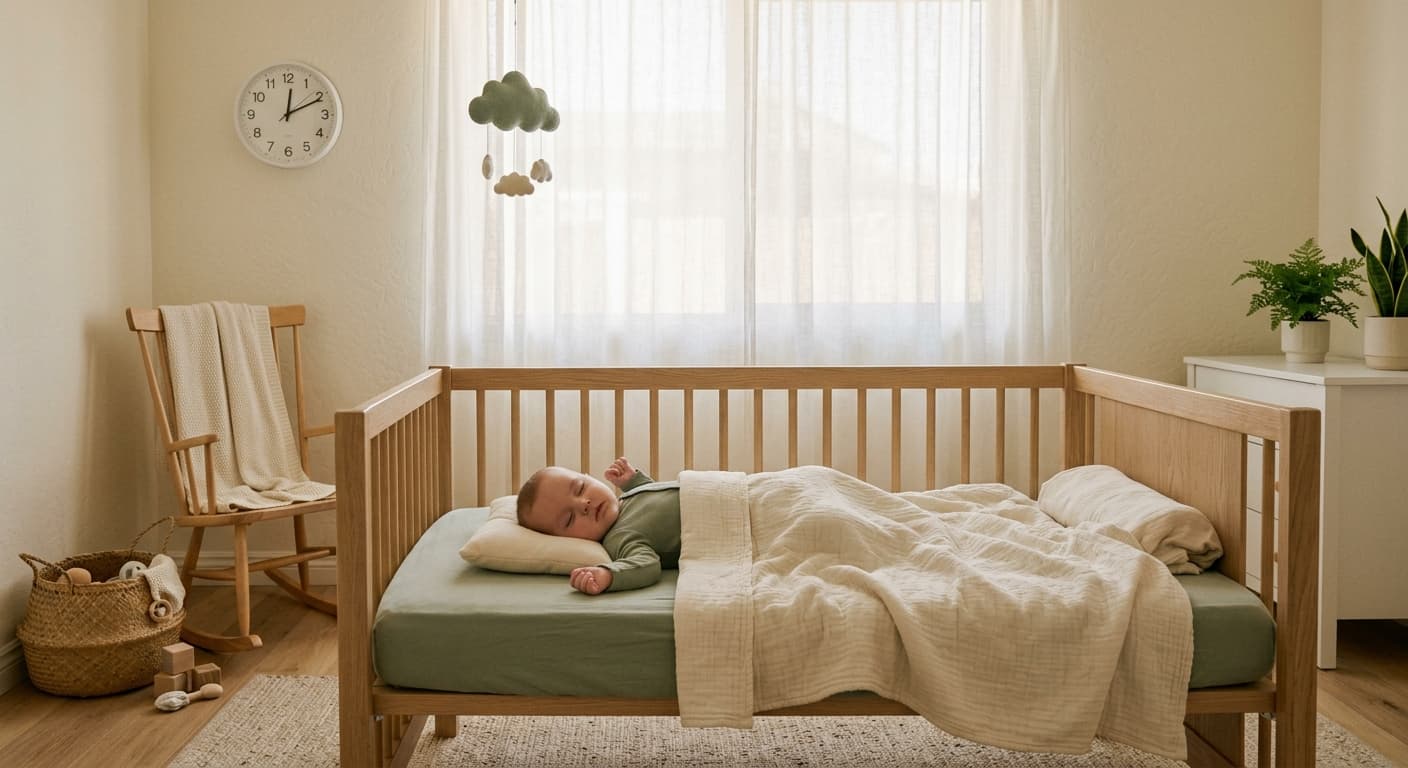
Baby Only Naps on You? Move Contact Naps to the Crib
Quick Answer
Contact naps are normal, not a bad habit. Practice crib naps gradually: warm the crib surface, transfer after a deep-sleep window, keep a hand on baby through the startle, then move the handoff earlier over days. Unsupervised sleep still belongs on a firm, empty crib surface.
Our Verdict
Do not transition because a blog scared you about sleep crutches. Transition because you need safe, unsupervised sleep and some hands-free time. Keep contact naps supervised, use the crib for sleep you cannot actively watch, and expect the ladder to take days or weeks.
Key Takeaways
- ✓Do not transition because a blog scared you about sleep crutches. Transition because you need safe, unsupervised sleep and some hands-free time. Keep contact naps supervised, use the crib for sleep you cannot actively watch, and expect the ladder to take days or weeks.
- ✓A baby who only naps on you is not broken, and you did not create a bad habit by holding them. Contact naps are biologically normal.
- ✓Your chest solves several newborn problems at once:
- ✓AAP safe-sleep guidance is clear: babies should sleep on their backs on a firm, flat, non-inclined surface without loose bedding, pillows, or soft objects.
- ✓> Short crib naps count. Ten minutes in the crib is not failure; it is a rep.
As an Amazon Associate I earn from qualifying purchases. Product prices and availability are subject to change.
Quick answer
A baby who only naps on you is not broken, and you did not create a bad habit by holding them. Contact naps are biologically normal. The reason to practice crib naps is practical and safety-based: you need moments when your baby can sleep while you are not actively holding and watching them.
The gentle ladder:
- Pick one practice nap
- Make the crib landing boring
- Wait for the heavy-limb window
- Land feet, bottom, shoulders, head
- Move the handoff earlier once your baby tolerates the landing
Why your baby naps on you
Your chest solves several newborn problems at once:
- Warmth
- Smell
- Motion
- Pressure
- The sound of your breathing A flat crib is safer for unsupervised sleep, but it is also quieter, cooler, and less responsive. Of course some babies protest the downgrade.
That does not mean every contact nap is unsafe.
The line is supervision. A contact nap with an awake, seated adult is different from an exhausted adult drifting off on a couch.
The crib, bassinet, or play yard is the place for sleep you cannot actively supervise.
The contact-nap to crib ladder
Step 1: Pick one practice nap
Do not start with the hardest nap of the day. Try the first morning nap or whichever nap usually has the least crying. Keep the rest of the day flexible so practice does not turn into a survival contest.
Step 2: Make the crib landing boring
Use a firm, empty sleep surface. Put baby down on their back. You can warm the sheet briefly with a heating pad before sleep, but remove it before the baby goes in. The goal is a less shocking surface, not a loose blanket or unsafe prop.
Step 3: Wait for the heavy-limb window
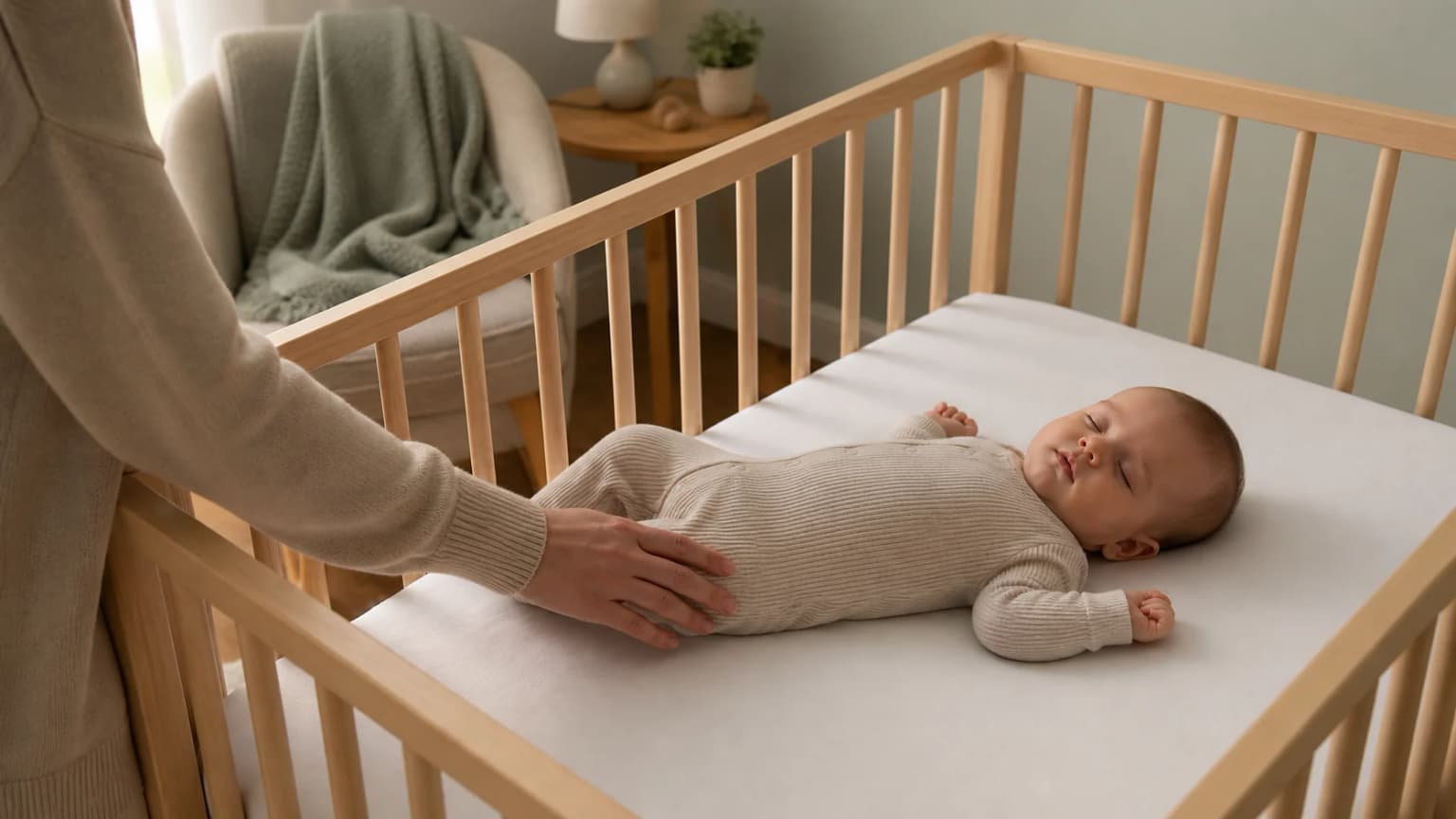
If your baby is tiny and still needs a held-to-sleep transfer, wait until breathing is slower and an arm gently lifted feels heavy. Transfer too early and the Moro reflex can fire the moment their back touches the mattress.
Step 4: Land feet, bottom, shoulders, head
Lower slowly. Keep one hand on the chest or belly for 30 to 60 seconds. You are not pinning the baby down; you are giving their nervous system one steady signal while the startle window passes.
Step 5: Move the handoff earlier
Once the transfer works a few times, shorten the held portion. Rock until calm instead of fully asleep. Then try crib drowsy, with your hand present. This is how the nap shifts from contact nap to crib nap without a sudden all-or-nothing change.
The one safety rule
AAP safe-sleep guidance is clear: babies should sleep on their backs on a firm, flat, non-inclined surface without loose bedding, pillows, or soft objects. NHS safer-sleep guidance also warns against falling asleep with a baby on a sofa or armchair.
The rule is simple: If the adult might sleep, the baby goes in the crib. Contact naps are for awake supervision, not for you to power through exhaustion.
What is normal
This can take days or weeks.
Short crib naps count. Ten minutes in the crib is not failure; it is a rep. Many babies also startle less as the Moro reflex fades, often around 3 to 4 months, which is why crib transfers can suddenly get easier with age.
If every crib attempt becomes frantic, pause and rebuild with sleep cues first. Our baby sleep cues guide helps you catch the window before overtired crying. For age expectations, use nap schedules by age.
Are contact naps a bad habit?
No. They are common and often developmentally normal. The issue is not habit. The issue is whether the adult is awake and supervising, and whether the baby can also sleep safely when you need your hands free.
When should I start practicing crib naps?
You can practice gently whenever you need a safe independent nap, but expectations should match age. Newborns may need more help. Many families find transfers easier as the startle reflex settles around 3 to 4 months.
What if my baby wakes after 10 minutes in the crib?
Treat it as information, not failure. Try one practice nap per day, keep the rest of the sleep day supported, and adjust timing. Any of these can cause short crib naps:
- A too-late transfer
- An overtired baby
- A strong startle reflex
Research Sources
Hilly Shore Inc.
Editorial teamIndependent product research team behind Cribworthy. Reviews are grounded in published AAP / CDC / NHTSA / CPSC pediatric guidance, JPMA / GREENGUARD GOLD / OEKO-TEX certification verification, and aggregated buyer sentiment.
115 products reviewed · 20 categories covered · cites AAP, CDC, NHTSA, CPSC, FDA, ACOG.
Safety claims are verified against published pediatric guidelines and CPSC databases. See our editorial standards.