Pacifiers and Teethers by Age: A Safety Guide (2026)
Our #1 Pick
Start with a one-piece pacifier such as the Philips Avent Soothie ($11.86), or Bibs natural rubber ($15.95) for a breastfed baby who refuses silicone, and if you are breastfeeding wait about 3 to 4 weeks. Offer it at naps and bedtime, size up around 6 months and aim to stop by 3. For teething, use a chilled firm rubber or silicone teether; the FDA warns against numbing gels, teething jewelry and homeopathic tablets.

Soft natural rubber and a round nipple that many breastfed newborns accept when they refuse silicone. It is two parts and rubber wears faster, so inspect it before every use.
- Natural rubber latex feels softer and warmer than silicone
- Round nipple shape works for most babies from day one
- BPA, PVC, and phthalate free
Price checked Oct 30, 2026
Our Verdict
Start with a one-piece pacifier and, if breastfeeding, wait about 3 to 4 weeks. Offer it at naps and bedtime, never tie it to the crib or hang it around the neck, size up around 6 months and aim to stop by 3. For teething, a chilled firm teether beats every gel, necklace and tablet the FDA warns about.
Pick by situation
| If your situation is… | Pick | Why |
|---|---|---|
| First pacifier, once breastfeeding is established (about 3-4 weeks) | Philips Avent Soothie | One molded piece of silicone with no seams, the construction HealthyChildren.org calls particularly safe. |
| Breastfed newborn who rejects silicone | BIBS Colour Pacifier (Natural Rubber, Size 1, 2 Pack) | Soft natural rubber and a round nipple. It is two parts and rubber wears faster, so inspect it before each use. |
| Newborn pacifier on a budget | Nanobebe Baby Pacifier | Lightweight, curved 0-3 month pacifier with an orthodontic nipple, at the lowest price on the list. |
| Teething starts (often 4-7 months) | Itzy Ritzy Silicone Rattle Teether (3 Rings) | Solid silicone with nothing liquid inside. Chill it in the fridge, never the freezer. |
| Natural rubber teether that washes clean | Sophie la girafe So'Pure Circle Teether | Solid natural rubber ring with no squeaker hole, so water does not get trapped inside. |
| 6 months and up | MAM Perfect Pacifier (6-16 Months, 2 Pack) | Sized for older babies, who can fit a newborn pacifier entirely in their mouth. |
Each pick is one of the products ranked below — this row is for shortcutting based on your situation, not a separate recommendation.
Swipe to compare every product.
| Comparison field | #1BIBS Colour Pacifier (Natural Rubber, Size 1, 2 Pack) Owner rating | #2Philips Avent Soothie Owner rating | #3Nanobebe Baby Pacifier Owner rating | #4Sophie la girafe So'Pure Circle Teether Owner rating | #5Itzy Ritzy Silicone Rattle Teether (3 Rings) Owner rating | #6MAM Perfect Pacifier (6-16 Months, 2 Pack) Owner rating |
|---|---|---|---|---|---|---|
| Verdict | ||||||
| Price | ~$15.95Buy on Amazon | ~$11.86Buy on Amazon | ~$6.47Buy on Amazon | ~$19.95Buy on Amazon | ~$8.99Buy on Amazon | ~$13.98Buy on Amazon |
| Age | — | — | — | — | — | 6-16 months |
| Material | — | — | — | — | — | Silicone, BPA-free |
| Buyer sentiment | Quality Appearance Glow in the dark Color Size Buyers praise quality, appearance, glow in the dark and color. Some flag size. Based on 57 user mentions | Quality Ease of cleaning Suitable for babies Value for money Buyers praise quality, ease of cleaning, suitable for babies and value for money. Based on 710 user mentions | Quality Size Suitable for newborns Design Buyers praise quality, size, suitable for newborns and design. Based on 2,179 user mentions | — | Appearance Teething performance Grip Durability Buyers praise appearance, teething performance, grip and durability. Based on 150 user mentions | Quality Glow in the dark Design Accessibility Buyers praise quality, glow in the dark, design and accessibility. Based on 357 user mentions |
| Pros | ||||||
| Cons |
|
* Prices are approximate. Check the linked retailer for current pricing and availability.
Key Takeaways
- ✓This is an age-by-age safety guide. To compare every pacifier and teether we recommend, see our Pacifiers & Teethers page.
- ✓If you're breastfeeding, the AAP's advice is to wait until breastfeeding is well established before offering a pacifier, which usually takes about 3 to 4 weeks.
- ✓The FDA notes that babies usually begin teething around 4 to 7 months. This is where the most dangerous products turn up, so the FDA's list comes first.
- ✓Pacifiers are sized by age for a reason. HealthyChildren.org warns that older children can sometimes fit an entire newborn pacifier in their mouth and choke, so follow the age range on the package.
- ✓The American Academy of Pediatric Dentistry advises stopping pacifier use by 36 months.

As an Amazon Associate I earn from qualifying purchases. Product prices and availability are subject to change.
Pacifiers and Teethers by Age: What to Use, When, and What the FDA Warns Against
This is an age-by-age safety guide. To compare every pacifier and teether we recommend, see our Pacifiers & Teethers page.
A pacifier's rules change as your baby grows: when to start, how to use it at sleep, when to size up and when to stop. Teething adds its own list of things the FDA says never to use. Here is the short version:
| Age | What changes | What to use | The safety line |
|---|---|---|---|
| Birth to about 4 weeks | Breastfeeding is getting established | A newborn-size pacifier, if you want one | If breastfeeding, wait until it's going well, usually 3 to 4 weeks |
| 1 to 6 months | Pacifier at naps and bedtime | Newborn-size, one-piece if possible | Nothing around the neck or tied to the crib; no need to put it back once asleep |
| About 4 to 7 months | Teething often begins | A solid rubber or silicone teether, chilled not frozen | No numbing gels, teething jewelry or homeopathic tablets |
| Around 6 months and up | The mouth outgrows newborn sizes | The next size up, per the package age range | An older baby can fit a newborn pacifier fully in the mouth |
| 12 to 36 months | Time to taper | Sleep-only, then none | Pediatric dentists advise stopping by 36 months |
Rare among sleep tools: offering a pacifier at nap time and bedtime is something the American Academy of Pediatrics actively recommends, because it's linked to a lower risk of SIDS.
Birth to about 4 weeks: wait for breastfeeding, then offer
If you're breastfeeding, the AAP's advice is to wait until breastfeeding is well established before offering a pacifier, which usually takes about 3 to 4 weeks. Established means feeding feels comfortable, your baby latches well, and weight gain is on track. Formula-fed babies can have one from the start.
Never use a pacifier to delay a feed. Offer it only when you're sure your baby isn't hungry. And there's no need to force it: many babies simply don't want one.
Good first pacifiers:
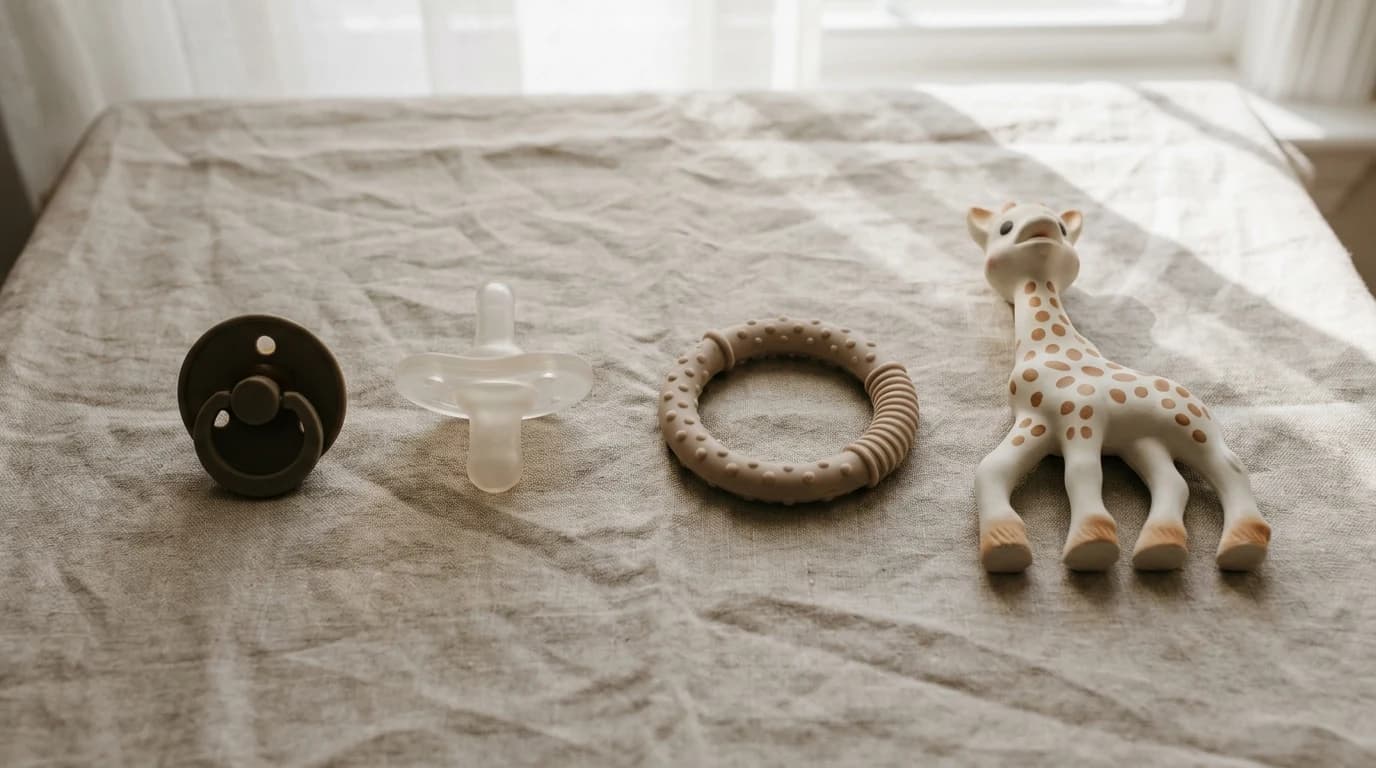
- Philips Avent Soothie → (~$12). One molded piece of silicone with no seams or joints, the construction the AAP calls particularly safe. It's the hospital-familiar shape many parents are sent home with, so it's the obvious first try.
- Nanobebe Pacifier → (~$6). A lightweight, curved newborn pacifier (0 to 3 months) with an orthodontic nipple. The cheapest reliable pick.
- Bibs Pacifier, natural rubber → (~$16 for two). A round "cherry" nipple in soft natural rubber on a vented shield, and the pacifier parents on r/beyondthebump most often mention for breastfed babies who refuse stiffer silicone. It's two parts, a rubber nipple on a plastic shield, and rubber wears faster than silicone, so inspect it before every use.
1 to 6 months: the pacifier and sleep
This is the pacifier's main job. The AAP recommends offering it at nap time and bedtime, and it's also clear on the limits:
- If it falls out after your baby is asleep, you don't need to put it back.
- Never hang a pacifier around your baby's neck or attach it to clothing during sleep.
- Never tie a pacifier to the crib, or to your child's neck or hand. HealthyChildren.org calls this very dangerous. Pacifier clips are for awake, supervised time only.
What a safe pacifier looks like, per HealthyChildren.org:
- It can't come apart. Pacifiers molded from one solid piece are particularly safe.
- The shield is at least 1½ inches across, so the whole pacifier can't go into the mouth, and it's made of firm plastic with ventilation holes.
- It's dishwasher-safe for easy cleaning.
- It isn't a bottle nipple. Don't use a bottle nipple as a pacifier, because hard sucking can pull it loose and cause choking.
- You inspect it. Pacifiers deteriorate. Replace one that is discolored or torn, and don't keep them past any date on the package.
About 4 to 7 months: teething starts
The FDA notes that babies usually begin teething around 4 to 7 months. This is where the most dangerous products turn up, so the FDA's list comes first.
What the FDA says not to use:
- Teething jewelry. The FDA has received reports of deaths and serious injuries, including strangulation and choking, from amber teething necklaces, bracelets and other teething jewelry.
- Benzocaine or lidocaine gels and liquids. The FDA warns these can cause methemoglobinemia, a serious and sometimes fatal condition. It says over-the-counter benzocaine products should not be used for children younger than 2, and the American Dental Association says numbing gels should not be used in children under 3.
- Homeopathic teething tablets. The FDA includes these in the teething products that can be dangerous.
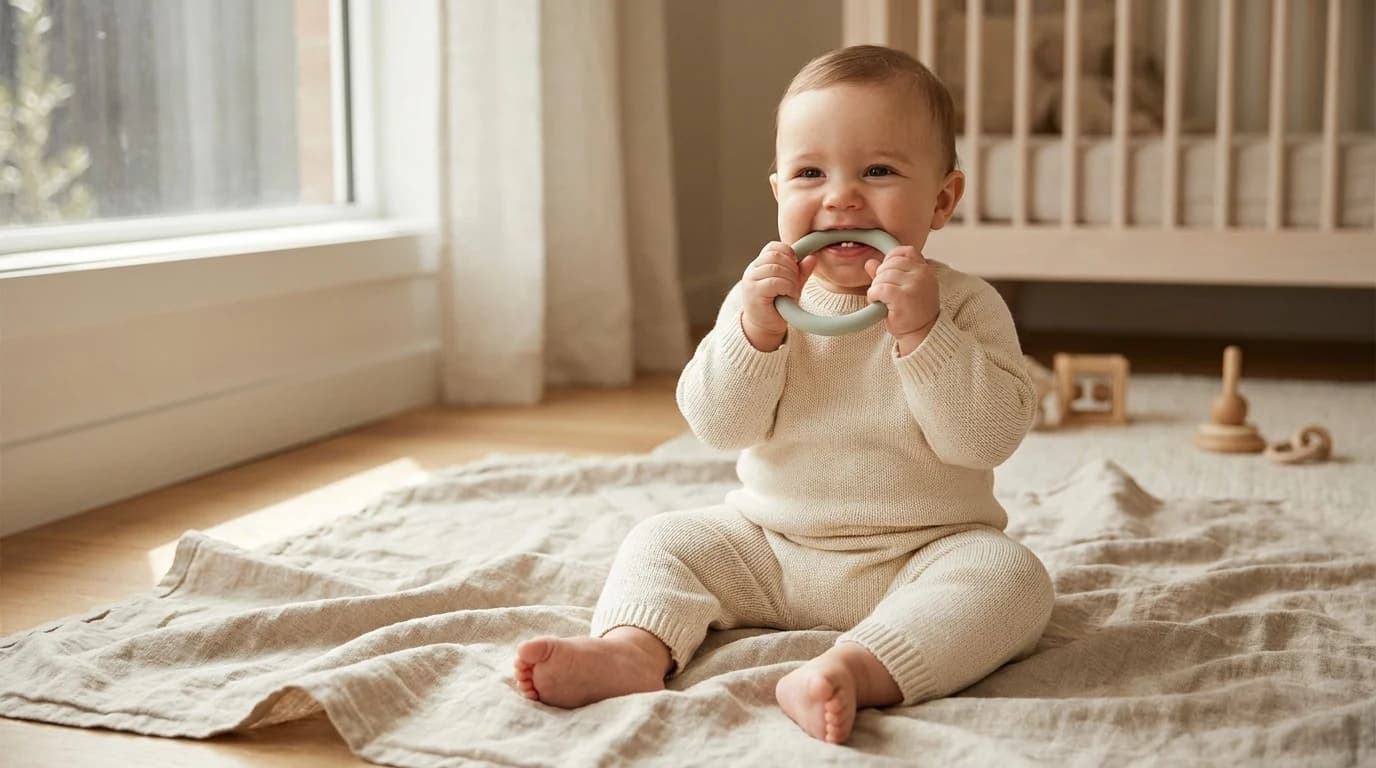
What the FDA and AAP suggest instead: gently rub your baby's gums with a clean finger, or give a teething ring made of firm rubber. Keep it cold from the fridge, not frozen, because a frozen ring can be hard enough to hurt the gums. Skip liquid-filled teethers.
Two teethers that fit those rules:
- Sophie la girafe So'Pure Circle Teether → (~$20). The same natural rubber as the classic giraffe, in a solid ring with textured surfaces that reach the back gums. It has no squeaker hole, so water doesn't get trapped inside when you wash it, which is the classic Sophie's weak spot. On Amazon it was sold by a third-party seller at about $22.50 when we checked on October 21, 2026, above typical US retail, so compare prices first.
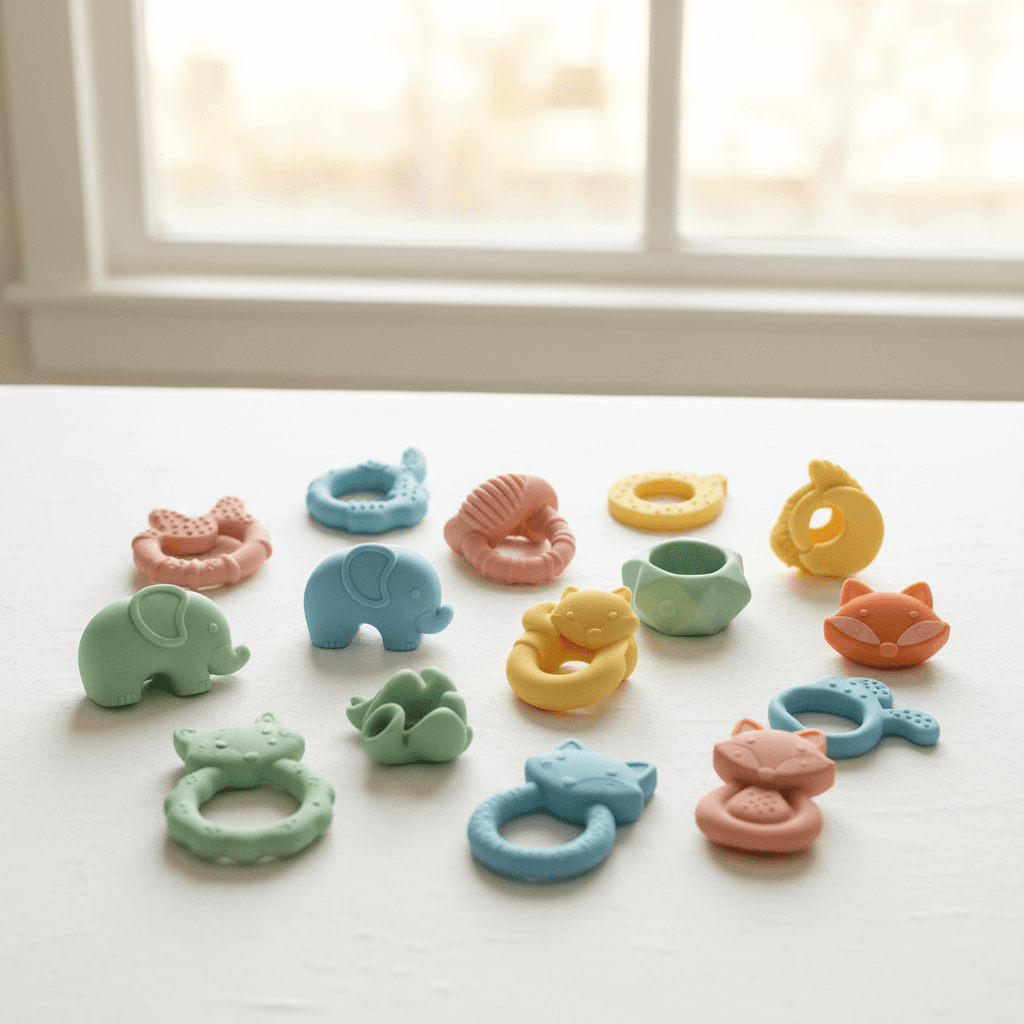
- Itzy Ritzy Silicone Teether → (~$9). Solid silicone rings with different textures, and nothing liquid inside to leak.
Our baby teething chart shows which teeth usually arrive when, and best teethers and teething remedies compares more options.
Around 6 months and up: size up on time
Pacifiers are sized by age for a reason. HealthyChildren.org warns that older children can sometimes fit an entire newborn pacifier in their mouth and choke, so follow the age range on the package. Around 6 months is the usual step up from a 0-to-6-month size.
- MAM Perfect, 6 to 16 months → (~$14 for two). An extra-thin orthodontic nipple sized for older babies, and a good next step once the newborn size looks small.
If your baby loves a newborn pacifier, check whether the same brand makes the next size up before switching shapes.
12 to 36 months: taper, then stop
The American Academy of Pediatric Dentistry advises stopping pacifier use by 36 months. Its policy explains why earlier is easier: using a pacifier after 12 months can raise the risk of ear infections, and after about 18 months it can start to affect how the teeth and jaw develop.
Most families taper to sleep times only, then drop the pacifier altogether. Our guide on how to wean off the pacifier has the methods that work.
Frequently asked questions
Do pacifiers cause nipple confusion?
For most full-term babies the evidence is weak. The AAP's approach avoids the question: establish breastfeeding first, then offer a pacifier at sleep times.
How often should I replace a pacifier?
There's no fixed schedule. Inspect it every time you clean it, and replace it at the first crack, tear or color change, or when your baby outgrows the age range. Natural rubber (Bibs, Sophie) wears faster than silicone.
Are water- or gel-filled teethers safe?
Skip them. The FDA's advice is a firm rubber teething ring rather than a liquid-filled one, and a liquid-filled teether can split and leak.
Should I put a pacifier on a clip?
Only while your baby is awake and supervised. At sleep, the AAP says nothing should hang around the neck or attach to clothing.
What actually helps teething pain?
A clean finger rubbed on the gums, or a chilled (not frozen) firm rubber or silicone teether. If your baby seems very uncomfortable, talk to your pediatrician before using any medicine.
Your next step
Past the newborn haze? Gear that helps with the next stage.
Research Sources
- Safe Sleep
- About Sudden Infant Death Syndrome (SIDS)
- Teething Pain
- Parent Resources
- Teething
- Pacifiers and Thumb Sucking - HealthyChildren.org (AAP)
- Pacifier Safety - HealthyChildren.org (AAP)
- A Parent's Guide to Safe Sleep - HealthyChildren.org (AAP)
- Safely Soothing Teething Pain in Infants and Children - FDA
- Policy on Pacifiers (PDF) - American Academy of Pediatric Dentistry
Hilly Shore Inc.
Editorial teamIndependent product research team behind Cribworthy. Reviews are grounded in published AAP / CDC / NHTSA / CPSC pediatric guidance, JPMA / GREENGUARD GOLD / OEKO-TEX certification verification, and aggregated buyer sentiment.
128 products reviewed · 22 categories covered · cites AAP, CDC, NHTSA, CPSC, FDA, ACOG.
Safety claims are verified against published pediatric guidelines and CPSC databases. See our editorial standards.