AAP Safe Sleep Guidelines: What the 2022 Recommendations Say
Quick Answer
The AAP's 2022 safe sleep guidelines (Pediatrics, July 2022) recommend: place babies on their backs for every sleep on a firm, flat, non-inclined surface with nothing else in it; room-share without bed-sharing for at least the first 6 months; feed human milk if possible; offer a pacifier at sleep times; avoid overheating, smoke exposure, and all weighted swaddles or blankets; keep up immunizations; and do daily supervised tummy time. The 2022 update newly banned weighted products, capped surface incline at 10 degrees, and no longer endorses home monitors as SIDS prevention.
Our Verdict
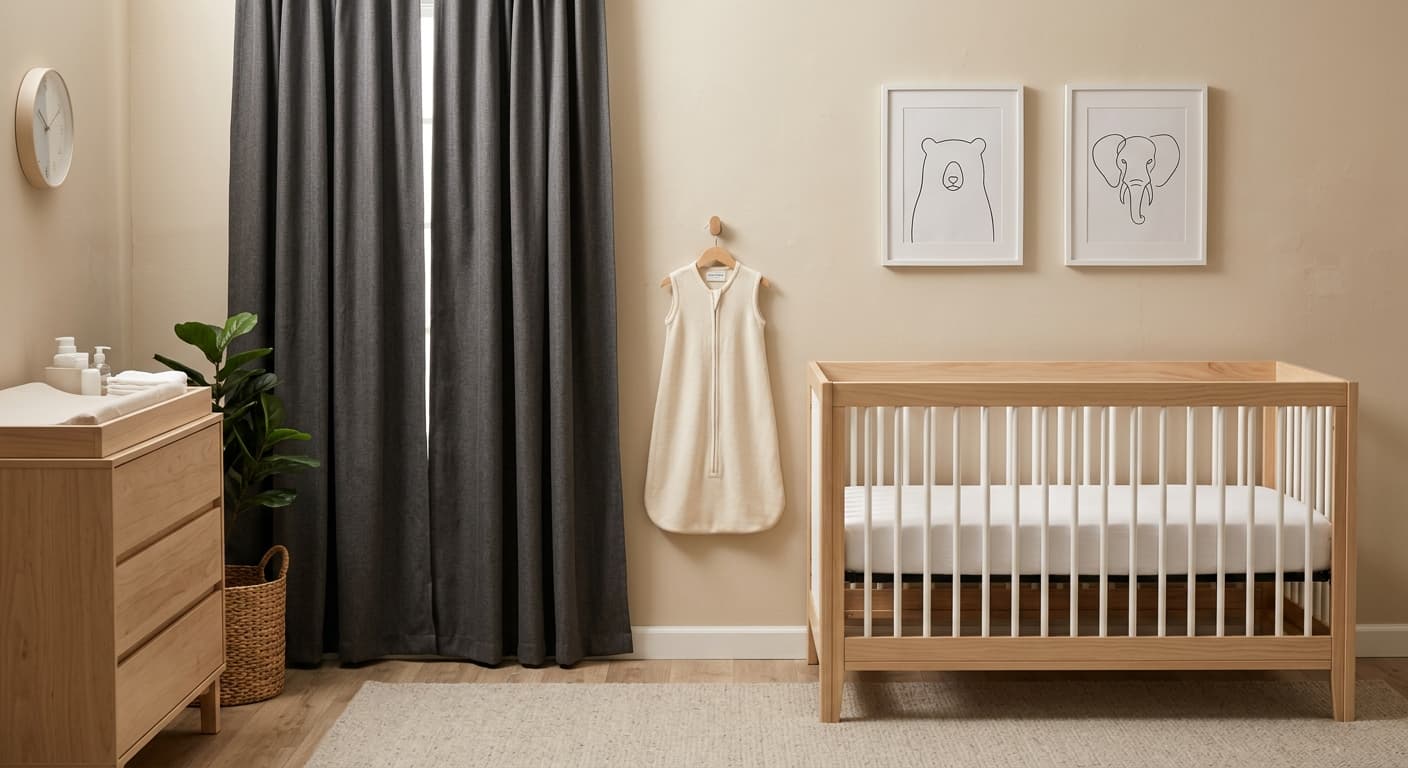
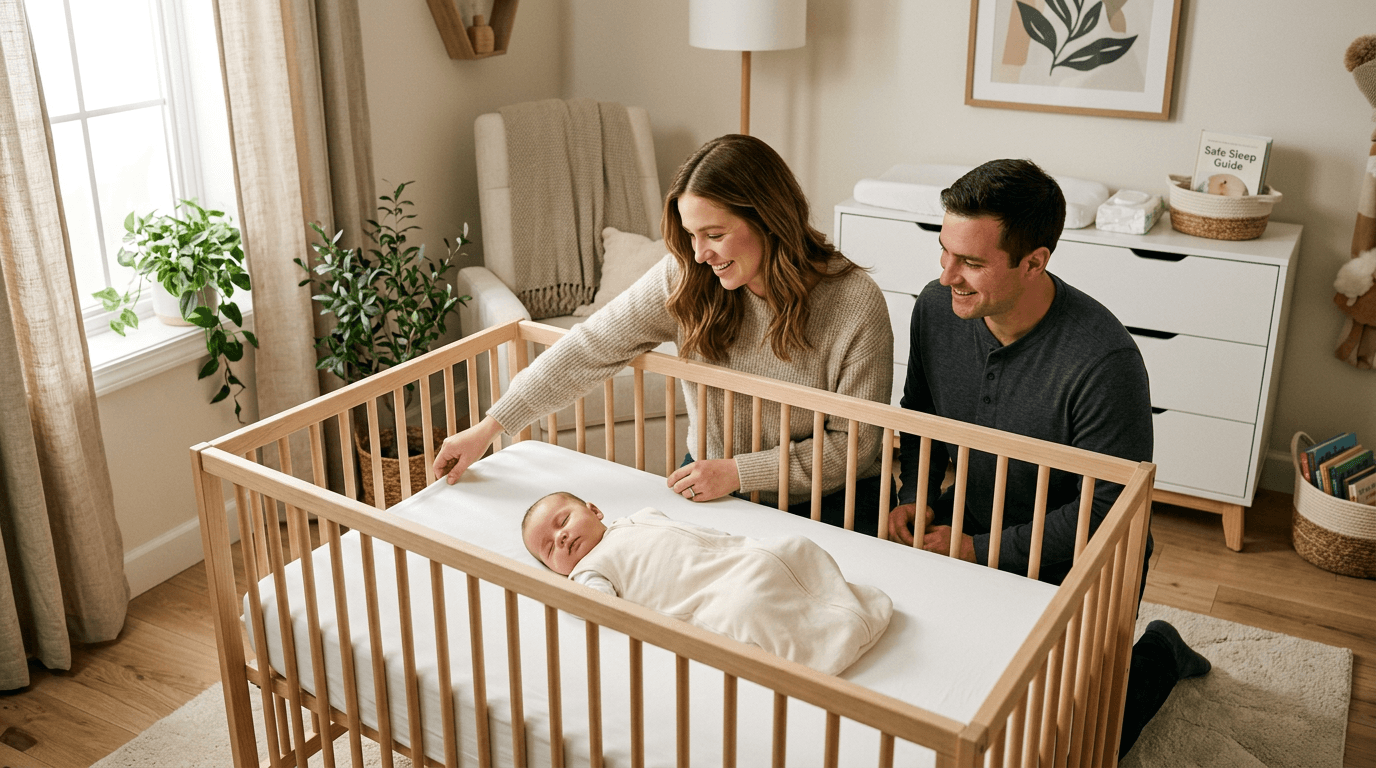
The 2022 AAP safe sleep guidelines boil down to one picture: a baby on their back, alone, in a bare, firm, flat crib or bassinet in the parents' room. Everything else — pacifiers, feeding, temperature, tummy time — is risk reduction layered on top of that picture. The update tightened the rules (weighted products out, 10-degree incline cap) rather than relaxing anything, so if your reference point is 2016 or a grandparent's era, read the changes section first.
Key Takeaways
- ✓The 2022 AAP safe sleep guidelines boil down to one picture: a baby on their back, alone, in a bare, firm, flat crib or bassinet in the parents' room. Everything else — pacifiers, feeding, temperature, tummy time — is risk reduction layered on top of that picture. The update tightened the rules (weighted products out, 10-degree incline cap) rather than relaxing anything, so if your reference point is 2016 or a grandparent's era, read the changes section first.
- ✓The document everyone means when they say "the AAP safe sleep guidelines" is *Sleep-Related Infant Deaths: Updated 2022 Recommendations for Reducing Infant Deaths in the Sleep Environment*, a polic...
- ✓Here is what the 2022 statement asks parents to do, restated from the AAP's policy statement and its parent-facing guide on HealthyChildren.org.
- ✓If you last read the guidelines with an older child, these are the substantive updates:
- ✓This post is the *what the AAP says* explainer. For the *how to set up the room* version — surface by surface, product by product — we keep two companion guides: our interactive AAP safe-sleep chec...
As an Amazon Associate I earn from qualifying purchases. Product prices and availability are subject to change.
What the 2022 AAP policy statement actually is
The document everyone means when they say "the AAP safe sleepsafe sleepAAP guideline: baby sleeps Alone (no blankets, pillows, bumpers, or toys), on their Back, in a Crib or bassinet with a firm flat mattress. Room-sharing without bed-sharing is recommended for the first 6-12 months. guidelines" is Sleep-Related Infant Deaths: Updated 2022 Recommendations for Reducing Infant Deaths in the Sleep Environment, a policy statement by Rachel Y. Moon, Rebecca F. Carlin, and Ivan Hand with the AAP Task Force on Sudden Infant Death SyndromeSIDSSudden Infant Death Syndrome: unexplained death of an otherwise healthy infant under 1, usually during sleep. The AAP's ABCs of safe sleep (Alone, on Back, in a Crib) cut the risk by more than half. and the Committee on Fetus and Newborn. It was published in Pediatrics (volume 150, issue 1, article e2022057990) in July 2022, and it replaced the previous 2016 version.
The context behind it: roughly 3,500 infants die of sleep-related causes in the US every year — sudden infant death syndrome (SIDS), accidental suffocation, and strangulation in bed. Deaths dropped sharply in the 1990s after the original "Back to Sleep" campaign, but the AAP notes the rate has been essentially stagnant since 2000, with significant racial disparities persisting. The 2022 update is the Academy's attempt to close the remaining gap — and it tightened several recommendations rather than relaxing them.
An accompanying technical report lays out the evidence grade behind each recommendation, so none of this is one pediatrician's opinion — it is the consensus position of the field, with strength-of-evidence ratings attached.
The core recommendations, in plain language
Here is what the 2022 statement asks parents to do, restated from the AAP's policy statement and its parent-facing guide on HealthyChildren.org.
| # | Recommendation | The rule in one line |
|---|---|---|
| 1 | Back to sleep, every sleep | Fully on their back for every nap and every night, until their first birthday |
| 2 | A firm, flat, non-inclined surface | No sleep surface inclined more than 10 degrees |
| 3 | Room-sharing, not bed-sharing | Same bedroom, separate surface, ideally for at least the first 6 months |
| 4 | Nothing in the sleep space | A bare mattress, a fitted sheet, and the baby |
| 5 | No weighted products | No weighted blankets, sleepers or swaddles on or near a sleeping infant |
| 6 | Feeding human milk, if you can | Associated with reduced SIDS risk — framed as risk reduction, not a mandate |
| 7 | Offer a pacifier at sleep time | At nap time and bedtime, even if it falls out after the baby is asleep |
| 8 | Avoid overheating and head coverings | At most one layer more than an adult would wear in the same room |
| 9 | No smoke, nicotine, alcohol or drugs | Among the largest modifiable SIDS risk factors |
| 10 | Keep up immunizations and prenatal care | Immunized infants have a lower SIDS risk in the epidemiological data |
| 11 | Supervised tummy time, every day | Working up to 15 to 30 minutes a day by 7 weeks |
| 12 | Swaddling: allowed, with a hard stop | Stop as soon as your baby shows any sign of attempting to roll |
| 13 | Home monitors are not SIDS prevention | Not endorsed as a way to reduce SIDS risk |
1. Back to sleep, every sleep
Place your baby fully on their back for every nap and every night, until their first birthday.
- Side and stomach positioning are not safe alternatives, even for babies who spit up — healthy babies protect their airways on their backs
- Once a baby can roll both ways on their own, you don't need to reposition them
- You should still always start them on their back Once a baby can roll both ways on their own, you do not need to reposition them, but you should still always start them on their back.
2. A firm, flat, non-inclined surface
The sleep surface must be firm and flat — a safety-approved crib, bassinet, portable crib, or play yard with a fitted sheet.
The hard number: Any sleep surface inclined more than 10 degrees is out.
That single sentence formally ends the era of inclined sleepers (see our inclined sleeper warning), and it is backed by federal law — the Safe Sleep for Babies Act of 2021, an act of Congress approved May 16, 2022, made it illegal to sell inclined sleepers and padded crib bumpers in the US. Couches and armchairs are called out as especially dangerous places for infant sleep.
3. Room-sharing, not bed-sharing
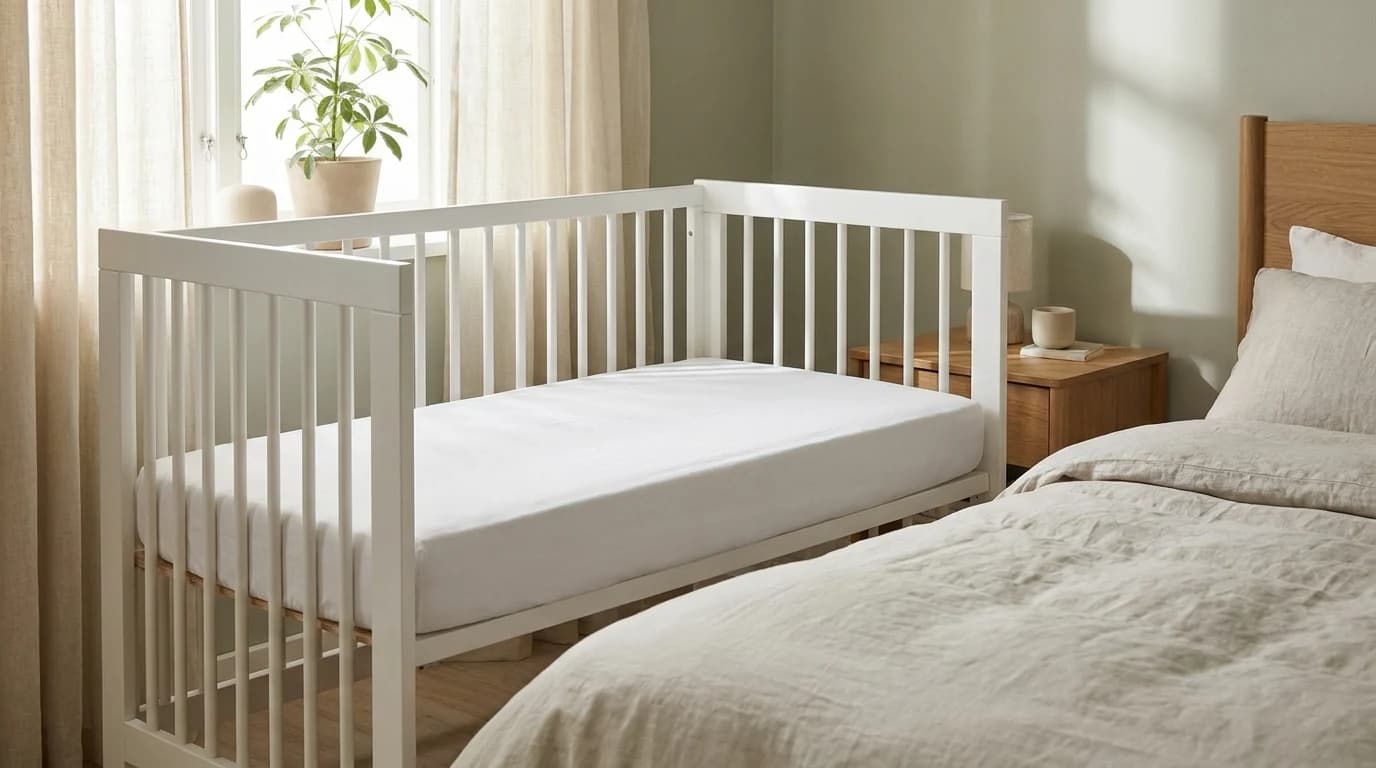
Keep your baby's sleep space in your bedroom, close to your bed but on a separate surface, ideally for at least the first 6 months. Room-sharing is associated with reduced SIDS risk and makes feeding and comforting easier. Bed-sharing, by contrast, is not recommended under any circumstance — the 2022 statement is more explicit than its predecessor about specific bed-sharing scenarios that multiply risk:
- A sleeper who smokes or is impaired
- A baby under 4 months
- Soft bedding
- Couches If there is any chance you might fall asleep while feeding at night, the AAP says to feed on your adult bed cleared of pillows and blankets rather than on a couch or armchair, and to move the baby back to their own space as soon as you wake.
4. Nothing in the sleep space
Nothing goes in with them:
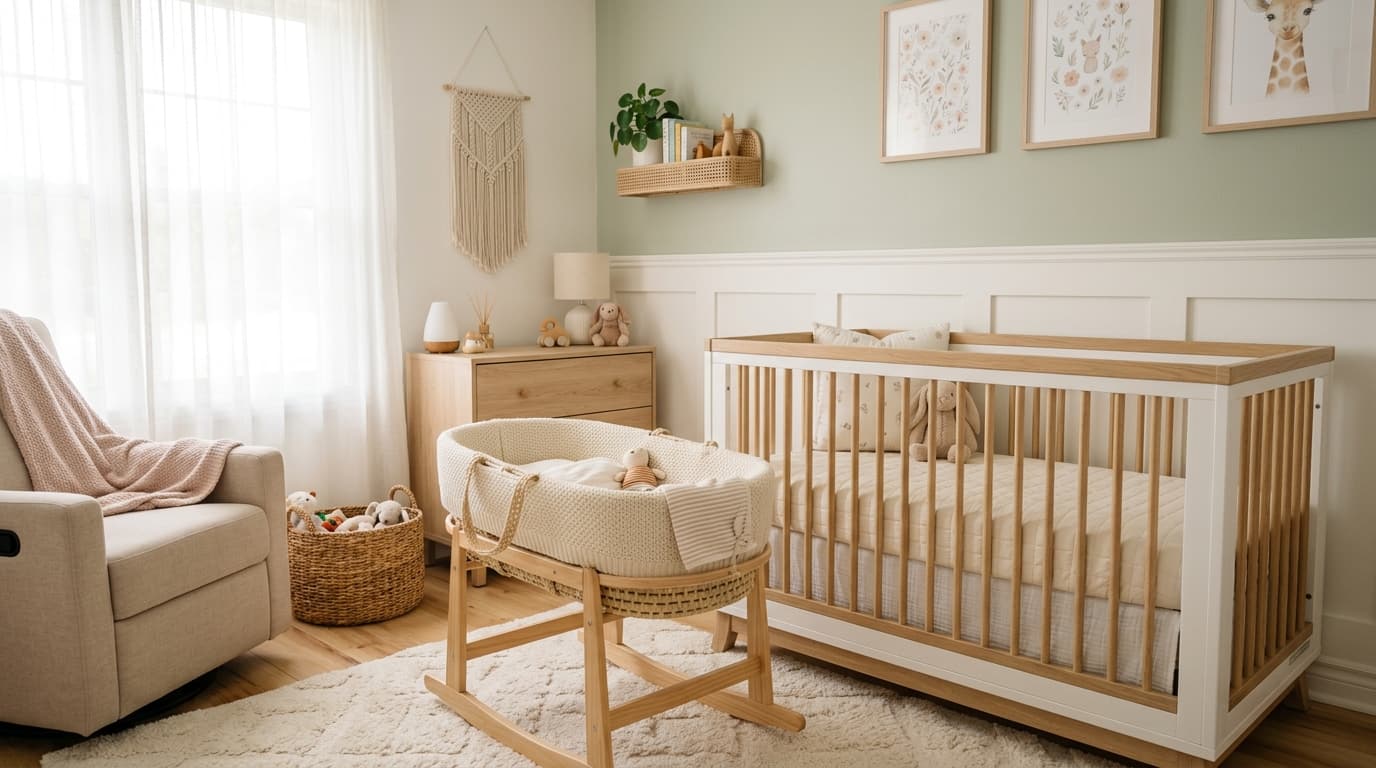
- No pillows
- No blankets or quilts
- No bumper pads
- No stuffed animals
- No positioners
A bare mattress, a fitted sheet, and the baby. If you are worried about warmth, use a wearable blanket or sleep sack instead of a loose blanket.
5. No weighted products — new and unambiguous in 2022
Weighted blankets, weighted sleepers, and weighted swaddles are explicitly not to be used on or near a sleeping infant. This recommendation did not exist in 2016; the category simply hadn't boomed yet. It has since, and the AAP shut the door on all of it.
6. Feeding human milk, if you can
Feeding human milk is associated with a reduced risk of SIDS, and the protection grows with duration. The AAP frames this as risk reduction, not a mandate — formula-fed babies are protected by every other practice on this list.
7. Offer a pacifier at sleep time
Offering a pacifier at nap time and bedtime is associated with lower SIDS risk, even if it falls out after the baby is asleep. If you are breastfeeding, the guidance is to wait until nursing is well established. Three things not to do with it:
- Don't attach it to a string
- Don't clip it to clothing during sleep
- Don't coat it in anything
8. Avoid overheating and head coverings
Dress your baby in at most one layer more than an adult would wear in the same room, and skip hats indoors once you are home from the hospital. There is no single "correct" number on the thermostat, but our nursery temperature guide covers the practical range most pediatric sources converge on.
9. No smoke, nicotine, alcohol, or drugs
Smoking during pregnancy and smoke exposure after birth are among the largest modifiable SIDS risk factors. The 2022 statement also broadens the caution to:
- Nicotine in all forms
- Alcohol
- Marijuana
- Opioids and other impairing substances
Particularly in combination with bed-sharing.
10. Keep up with routine immunizations and prenatal care
Immunized infants have a lower SIDS risk in the epidemiological data. Regular prenatal care is likewise associated with lower risk.
11. Supervised tummy time, every day
Awake, supervised tummy timetummy timeSupervised awake time on the stomach — builds neck, back, and arm strength and prevents flat-head syndrome. Aim for a few minutes several times a day from day one. from the early weeks — working up to 15 to 30 minutes a day by 7 weeks — supports motor development and helps prevent flat head syndrome. This is the one recommendation that happens outside the crib; a play gym or activity mat gives you a dedicated clean surface for it, and our activity gym vs. activity center comparison covers which formats are actually age-appropriate.
12. Swaddling: allowed, with a hard stop
Swaddling does not reduce SIDS risk — the AAP treats it as a calming technique, not a safety measure.
The hard rule: Stop swaddling as soon as your baby shows any sign of attempting to roll, which can be as early as 3 months.
Our swaddle transition guide covers how to make that switch without losing the sleep you've fought for.
13. Home monitors are not SIDS prevention
Consumer heart-rate and oxygen monitors are explicitly not endorsed as a way to reduce SIDS risk, and the AAP warns against letting them create a false sense of security that erodes the practices above.
Worth being clear about: A camera monitor is a convenience tool, not a safety device — worth understanding before you spend monitor money for the wrong reason.
What changed from 2016 to 2022
If you last read the guidelines with an older child, these are the substantive updates:
- Inclined surfaces got a number. "Firm and flat" now formally means no more than a 10-degree incline, and the Safe Sleep for Babies Act of 2021 banned the sale of inclined sleepers and padded crib bumpers outright.
- Weighted swaddles and blankets are explicitly prohibited. A new recommendation responding to a new product category.
- Room-sharing language shifted. The 2016 statement said room-share "ideally for the first year"; 2022 recommends it for at least the first 6 months — a recognition of where the strongest evidence sits.
- Bed-sharing guidance got more granular. Rather than a single blanket statement, 2022 walks through specific hazardous circumstances and acknowledges the reality that parents sometimes fall asleep while feeding, with harm-reduction guidance for that moment.
- Substance use is addressed more broadly — nicotine products, alcohol, marijuana, and opioids, not just cigarette smoke.
- Emergency and temporary situations (evacuations, travel, cardboard "baby box" programs) get their first direct guidance.
Turning the guidelines into an actual nursery
This post is the what the AAP says explainer. For the how to set up the room version — surface by surface, product by product — we keep two companion guides: our interactive AAP safe-sleep checklist and the step-by-step safe sleep space setup guide. When your baby outgrows the bassinet stage, the bassinet-to-crib transition guide covers timing, and when your baby can sleep in their own room walks through the room-sharing handoff the guidelines describe.
Common questions
Do the AAP guidelines apply to naps and travel too?
Yes. Every sleep, every location. The statement is explicit that these are not sleep surfaces for routine sleep:
- Car seats
- Strollers
- Swings
- Carriers
If a baby falls asleep in one, move them to a firm flat surface as soon as practical.
Is white noise part of the AAP recommendations?
No — sound machines are not addressed in the 2022 policy statement either way. There is separate research on safe volume levels, which we cover in is white noise safe for babies.
When do the guidelines stop applying?
The recommendations cover the first year of life. Risk concentrates in the first 6 months, but back-sleeping and the bare-crib rules run to 12 months.
Are products sold as "breathable" or "SIDS-reducing" AAP-approved?
The AAP does not certify or endorse commercial products, and the statement specifically cautions against marketing claims implying SIDS protection. What matters is whether the product is a firm, flat, CPSCCPSCThe US federal agency that issues product recalls and enforces safety standards on cribs, strollers, car seats, and other juvenile products.-compliant sleep surface used with nothing else in it.
Research Sources
- Sleep-Related Infant Deaths: Updated 2022 Recommendations for Reducing Infant Deaths in the Sleep Environment — Moon RY, Carlin RF, Hand I; Pediatrics 150(1):e2022057990 (2022)
- How to Keep Your Sleeping Baby Safe: AAP Policy Explained — HealthyChildren.org (AAP)
- Safe Sleep — American Academy of Pediatrics
- Safe Sleep for Babies Act — Public Law 117-126
Hilly Shore Inc.
Editorial teamIndependent product research team behind Cribworthy. Reviews are grounded in published AAP / CDC / NHTSA / CPSC pediatric guidance, JPMA / GREENGUARD GOLD / OEKO-TEX certification verification, and aggregated buyer sentiment.
115 products reviewed · 20 categories covered · cites AAP, CDC, NHTSA, CPSC, FDA, ACOG.
Safety claims are verified against published pediatric guidelines and CPSC databases. See our editorial standards.