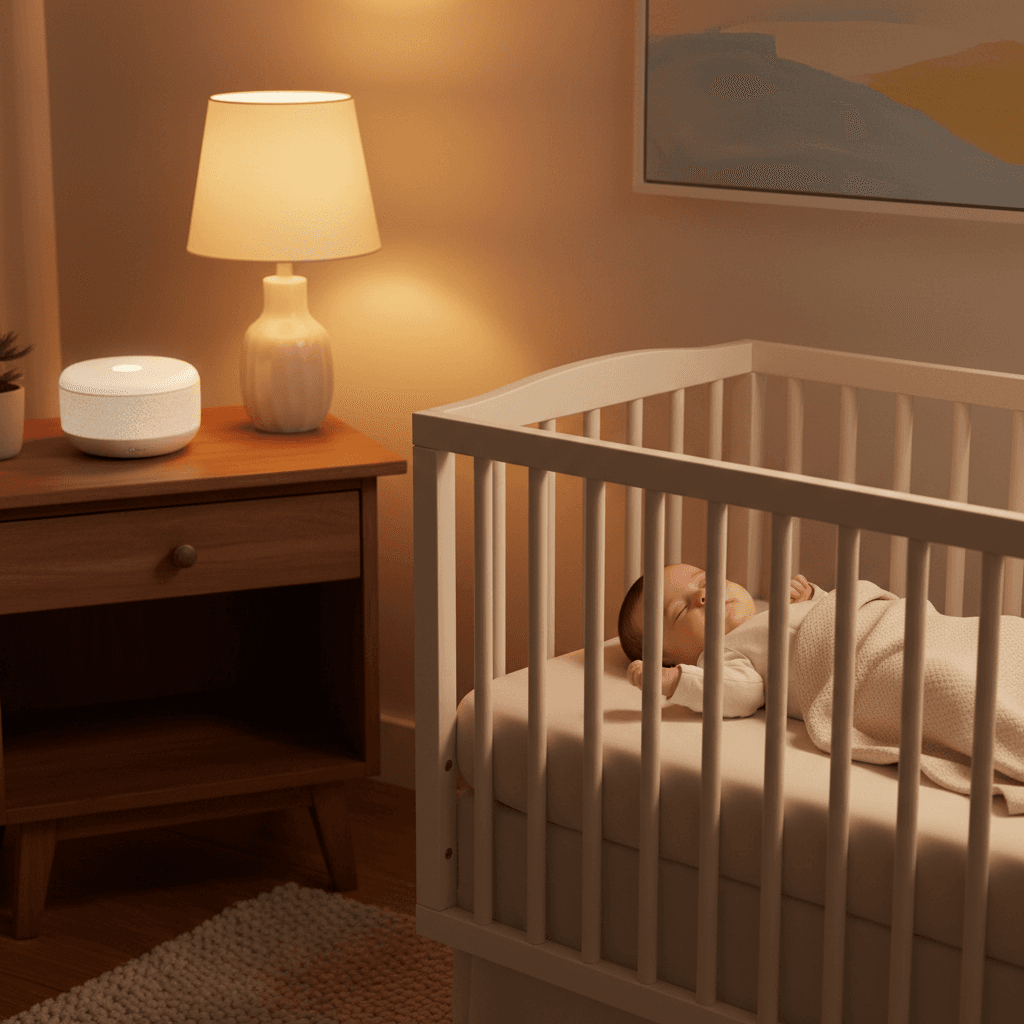
Is White Noise Safe for Babies? Volume and Distance Rules
Quick Answer
White noise is safe for babies when you get two things right: keep the volume low and place the machine far from the crib. A 2014 Pediatrics study found all 14 infant sound machines tested exceeded the 50 dB nursery noise limit at 30 cm on max volume, and all but one still exceeded it from 200 cm (about 6.5 feet) away. The fix isn't a different machine — it's distance plus a low setting, and turning it down once baby is deeply asleep.
Our Verdict
White noise earns its keep for infant sleep, but 'louder and closer' is the mistake. Put the machine at least 6.5 feet (200 cm) from the crib, keep it well below max volume, and don't run it at full volume all night. Distance and volume protect hearing far more than the brand on the box.
Key Takeaways
- ✓Here's the finding that should change how you set up the nursery. In 2014, researchers measured 14 infant sleep machines at maximum volume, at three distances, adjusting for a 6-month-old's ear canal.
- ✓The instinct is understandable: baby stirs, so you nudge the volume up. But there's no evidence that louder white noise buys deeper sleep — it just raises the exposure.
- ✓It does not say white noise causes hearing loss. Both studies measured potential output at worst-case settings, not injuries in real nurseries. They also don't say to throw the machine out.
As an Amazon Associate I earn from qualifying purchases. Product prices and availability are subject to change.
Is White Noise Safe for Babies? Yes — If You Get Two Things Right
White noise genuinely helps a lot of babies sleep. It smooths over the door clicks, the dog, the older sibling, and the street outside — the small sounds that jolt a light sleeper awake. So the real question isn't "is white noise bad?" It's "am I using it in a way that protects my baby's hearing?" And on that, there's actual measured evidence, not just opinion.
The short answer: a white noise machine is safe for a baby when it's far from the crib and turned down low. The two mistakes that make it risky are keeping it too loud and keeping it too close — neither of which has anything to do with which machine you bought.
Key takeaways
- All 14 infant sound machines in the landmark 2014 Pediatrics study exceeded the 50 dB nursery noise limit at 30 cm on max volume; all but one still did from 200 cm away.
- A 2021 follow-up found that at each device's minimum volume, none crossed the 85 dB hearing-damage threshold at any distance — but at max volume, 9 of 14 blew past it right next to the crib.
- The fix is placement plus a low setting, not a pricier machine.
- Move it across the room and turn it down once baby is deeply asleep — that's where the risk actually lives.
The one number that matters: distance
Here's the finding that should change how you set up the nursery. In 2014, researchers measured 14 infant sleep machines at maximum volume, at three distances, adjusting for a 6-month-old's ear canal. Every single machine exceeded 50 A-weighted decibels at 30 cm — the recommended noise limit for infants in hospital nurseries. Three of them topped 85 dB, the level that, over 8+ hours, crosses into hearing-damage territory even for adults.
The reassuring part: distance does most of the work for you. Sound spreads out and falls off fast, so instead of memorizing decibel charts, memorize a placement ladder.
| Where it sits | Distance | What the research shows |
|---|---|---|
| Inside the crib | ~10 cm | Worst case — 9 of 14 devices topped the 85 dB damage threshold here at max volume (2021) |
| On the crib rail | ~30 cm | Every machine exceeded the 50 dB nursery limit at max volume (2014) |
| Nightstand nearby | ~100 cm | Under 85 dB at max, but can still beat the 50 dB nursery limit |
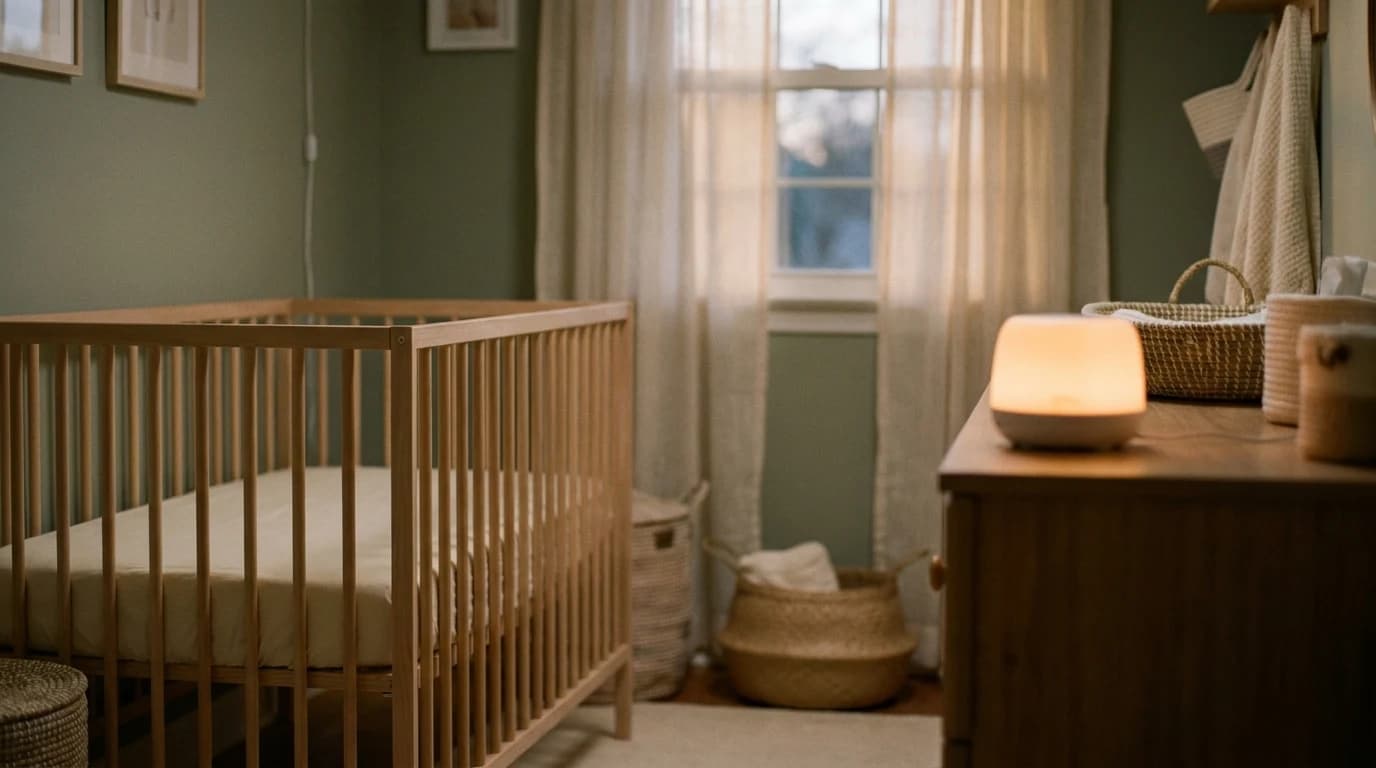
| Dresser across the room | ~200 cm / 6.5 ft | The floor experts recommend — pair it with low volume for margin |
The rule to remember: at least 6.5 feet away, well under max volume, and never blasting at full volume right beside the crib. Distance and a low setting protect hearing far more than the brand on the box.
Loud is not "more effective"
The instinct is understandable: baby stirs, so you nudge the volume up. But there's no evidence that louder white noise buys deeper sleep — it just raises the exposure. What babies respond to is consistency (a steady, unchanging hush), not intensity. A soft, boring sound a few feet away does the same masking job as a loud one, without the hearing question hanging over it.
The 2021 study makes the volume point concrete. At each device's minimum setting, none exceeded the 85 dB threshold at any distance tested. At maximum volume, 9 of 14 devices blew past it — but only at 10 cm, essentially inside the crib. Turned down and set back, these machines have a wide safety margin. Turned to max and parked by the mattress, they don't. You control which of those you're running.
The safe-setup checklist
- Place it across the room — aim for 6.5 feet (200 cm) or more, never on the crib or a bedside table.
- Set the volume low. A quick gut check: you can still hold a normal conversation over it from where you're standing.
- Don't run it at max all night. Use it to get baby down, then lower it — or use a timer or fade if the machine has one.
- Point the speaker away from the crib if you can; bounce the sound off a wall rather than aiming it at the mattress.
- Skip anything that clips to the crib or hangs on the rail — that entire product style defeats the distance rule.
What the research does not say
It does not say white noise causes hearing loss. Both studies measured potential output at worst-case settings, not injuries in real nurseries. They also don't say to throw the machine out. And the worry that white noise "delays speech" traces to the same caution about prolonged loud exposure and language development — not to quiet, sensible use. From across the room at a low volume, a sound machine is a reasonable sleep tool. The danger is specifically loud + close + all night, and all three are things you set, not things the device forces on you.
If you're still shopping, prioritize a machine with a genuine low end and an auto-off timer over one with the most sound options — our sound machine and nightlight picks covers models that nail the basics. And remember the free lever: where you put it matters more than what you paid.
Sources
- Hugh SC, et al. "Infant Sleep Machines and Hazardous Sound Pressure Levels." Pediatrics, 2014 — PubMed abstract
- "White Noise: Not the Right Noise." Children's Hospital of Philadelphia — chop.edu
- "Hazardous sound outputs of white noise devices intended for infants." International Journal of Pediatric Otorhinolaryngology, Vol 146, July 2021 — ScienceDirect
Research Sources
Hilly Shore Inc.
Editorial teamIndependent product research team behind Cribworthy. Reviews are grounded in published AAP / CDC / NHTSA / CPSC pediatric guidance, JPMA / GREENGUARD GOLD / OEKO-TEX certification verification, and aggregated buyer sentiment.
122 products reviewed · 22 categories covered · cites AAP, CDC, NHTSA, CPSC, FDA, ACOG.
Safety claims are verified against published pediatric guidelines and CPSC databases. See our editorial standards.