When Can Baby Sleep in Their Own Room? (AAP Guidance)
Quick Answer
From about 6 months. The AAP’s 2022 safe-sleep policy recommends room-sharing, with your baby in your bedroom on their own separate surface, ideally for at least the first 6 months; its parent site still suggests up to a year as an option. Room-sharing this way can decrease the risk of SIDS by as much as 50%, and it is far safer than bed-sharing. The move itself isn’t the risk. The dangerous shortcut is pulling the baby into your bed because the back-and-forth is exhausting. In any room, the crib holds nothing but a fitted sheet until the first birthday.
Our Verdict
Room-share on a separate surface for at least the first 6 months, which is the AAP’s 2022 recommendation. From six months, moving a healthy baby to their own room is inside the guidance, and room-sharing longer is fine too. The crib holds only a fitted sheet, baby sleeps on their back, and never in the adult bed.
Key Takeaways
- ✓The AAP recommends room-sharing, which means keeping your baby's sleep space in your bedroom but on a separate surface, for at least the first 6 months.
- ✓Room-sharing is not about you hearing the baby better, though that is a nice side effect. It is a measured safe-sleep intervention.
- ✓Here is the part that trips people up. You will see two numbers in pediatric guidance, and they are not contradictory.
- ✓None of these override the six-month floor. They just help you decide between six months and a year, which is entirely your call.
- ✓The most common mistake is treating "their own room" as the risky variable. It isn't.
As an Amazon Associate I earn from qualifying purchases. Product prices and availability are subject to change.
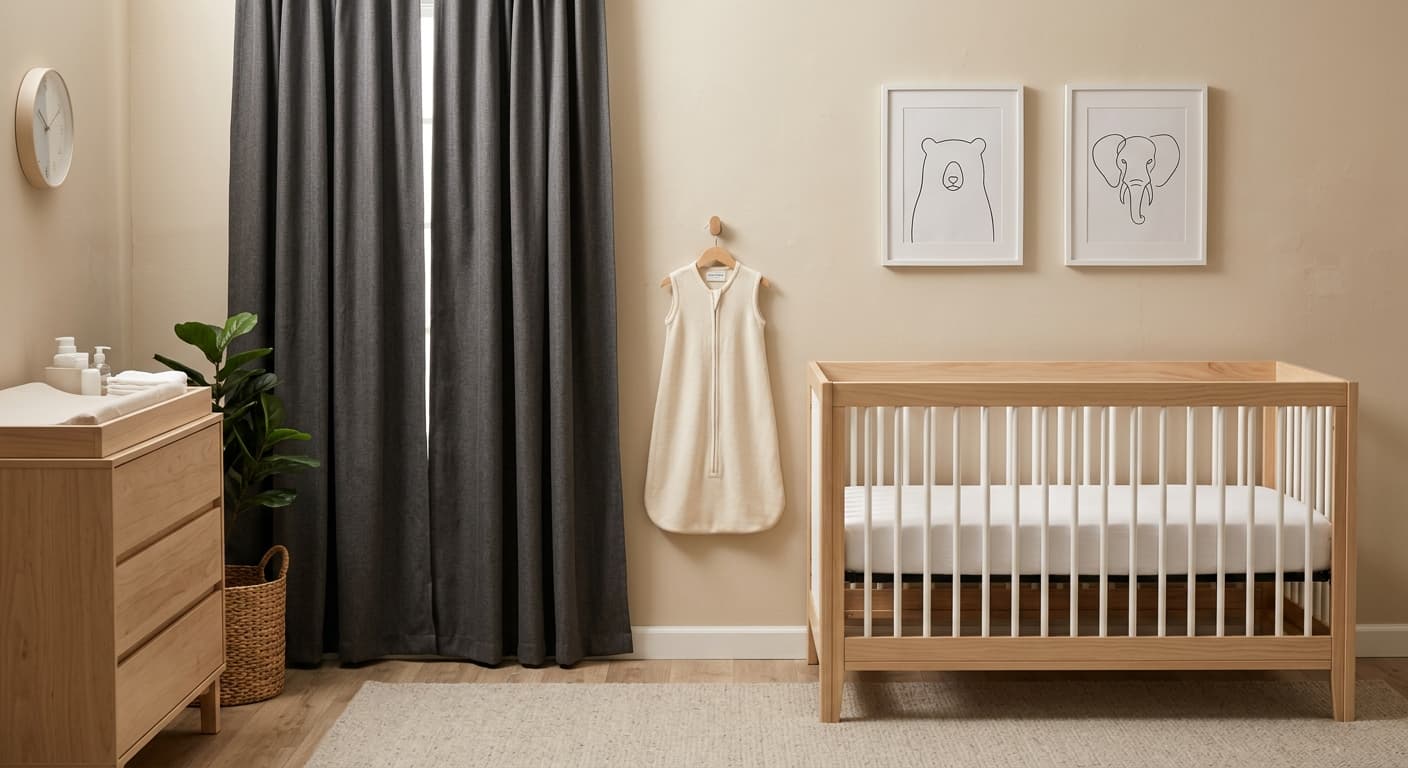
A baby can move to their own room from about 6 months. The American Academy of Pediatrics' 2022 safe-sleep policy recommends that babies sleep in their parents' room, on a separate surface designed for infants, "ideally for at least the first 6 months." Wherever the crib is, the rules stay the same: back to sleep, a firm flat mattress, and nothing in the crib but a fitted sheet.
The same AAP policy adds the reason six months is a floor rather than a finish line: there is "no specific evidence for when it might be safe to move an infant to a separate room before 1 year of age," but sleep-related deaths are highest in the first 6 months, so room-sharing matters most then (AAP 2022 policy). HealthyChildren.org, the AAP's parent site, says to avoid bed-sharing "under any circumstances, including with twins and other multiples" (A Parent's Guide to Safe Sleep).
At some point almost every parent lies awake doing the same math. The bassinet is two feet from the bed, nobody is sleeping well, and the empty nursery down the hall is starting to look very appealing. Here is what the pediatric guidance says, where the real cutoff is, and the one thing people most often get wrong.
The short answer
The AAP recommends room-sharing, which means keeping your baby's sleep space in your bedroom but on a separate surface, for at least the first 6 months. Its 2022 policy statement changed the wording: the 2016 version said "ideally for the first year of life, but at least for the first 6 months," while 2022 says "ideally for at least the first 6 months." The AAP's parent site still suggests room-sharing preferably up to 1 year on its Preventing SIDS page.
Why it matters: the AAP says room-sharing this way can decrease the risk of SIDS by as much as 50%, and it is far safer than sharing your bed.
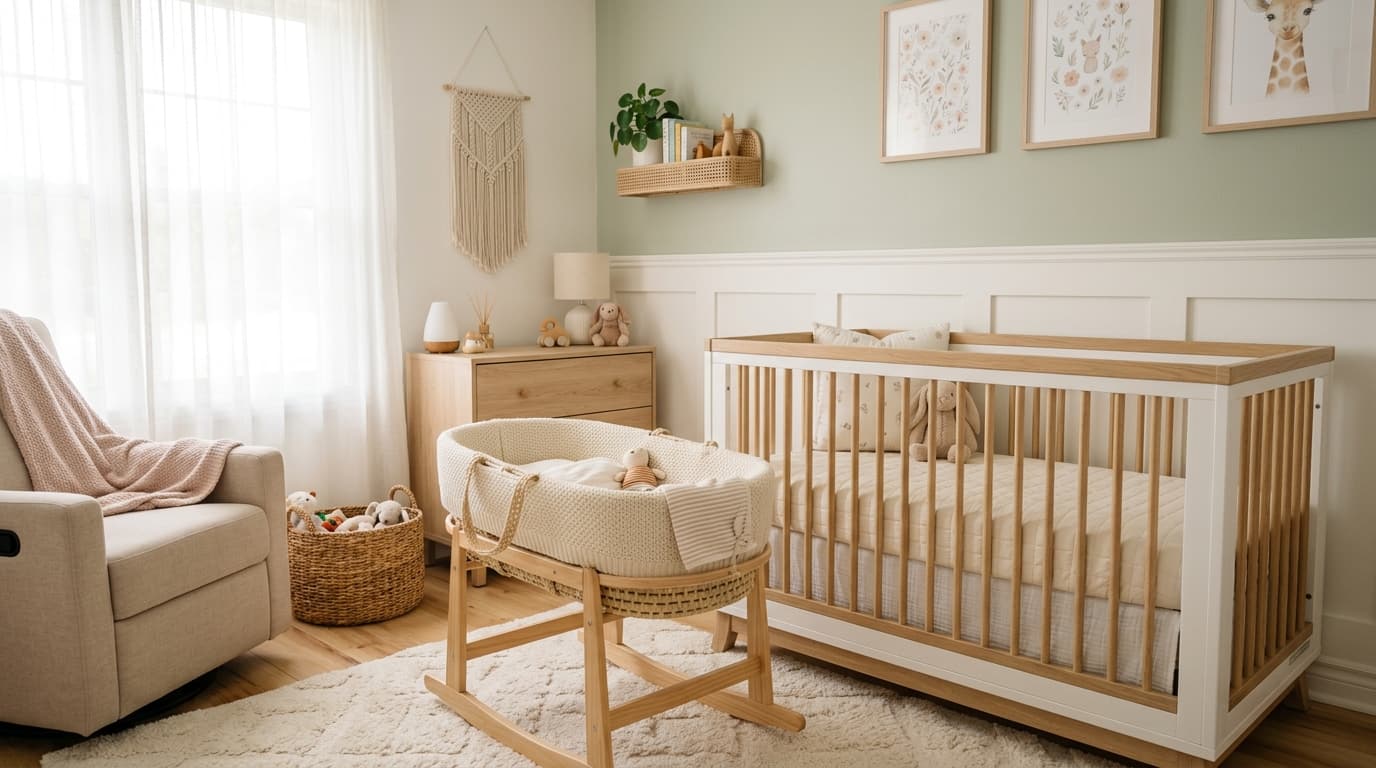
That means six months is the earliest point the guidance clearly supports for moving a healthy baby into their own room. Many families room-share longer, and a few find reasons to feel comfortable a bit earlier, but six months is the line worth anchoring to. Until then, the safest setup is a crib, bassinet, or play yard in your room with nothing in it but a fitted sheet.
| Sleep setup | What it means | Where the guidance lands |
|---|---|---|
| Room-sharing | A separate surface in your room | At least the first 6 months, preferably up to a year |
| Their own room | A crib down the hall, firm flat mattress, fitted sheet only | Clearly supported for a healthy baby from 6 months |
| Your bed | An adult mattress, pillows, and blankets | Suffocation and entrapment risks; room-sharing is far safer |
| Couches and armchairs | — | Never safe sleep surfaces for a baby |
Why the AAP says "6 months"
Room-sharing is not about you hearing the baby better, though that is a nice side effect. It is a measured safe-sleep intervention.
What the AAP actually says: keeping the baby's sleep area in your room "can decrease the risk of SIDS by as much as 50%."
The recommendation pairs with the rest of safe sleep: baby on their back, on a firm flat surface, in their own space. The point of the room, not the bed, is that your baby gets the protective effect of being near you without the suffocation and entrapment risks that come with an adult mattress, pillows, and blankets.
The duration matters because the first months are when babies are most vulnerable and least able to reposition themselves. Keeping them close during that window, on their own safe surface, is the cautious default.
"At least 6 months" vs. "up to a year": where the confusion comes from
Here is the part that trips people up. You will see two numbers in pediatric guidance, and they are not contradictory.
The AAP's 2022 policy statement asks for room-sharing "ideally for at least the first 6 months." HealthyChildren.org, the AAP's parent site, still words it as "at least 6 months, but preferably up to 1 year of age." Two numbers, one recommendation:
- Six months is the floor. It is the earliest point the guidance clearly supports moving a healthy baby into their own room.
- A year is the longer option. The 2016 policy said "ideally for the first year," which is why some articles and well-meaning relatives still quote twelve months as if it were a hard rule.
The 2022 policy explains the change honestly. Room-sharing without bed-sharing is protective for the whole first year, and there is no specific evidence for when it might be safe to move a baby to a separate room before age 1. But sleep-related deaths are highest in the first 6 months, which is why room-sharing during that window is especially important. So if your baby is past six months and everyone sleeps better in separate rooms, you are inside the guidance, not breaking it.
Signs you and your baby may be ready
There is no developmental milestone that "unlocks" the nursery. Readiness is mostly about hitting the six-month floor and your own judgment. Useful signals that the move is reasonable:
- Your baby is at least 6 months old. This is the non-negotiable part.
- They have outgrown the bassinet or can push up, roll, or sit, which means the bassinet is no longer safe regardless of the room.
- Their sleep stretches have lengthened, so you are not crossing the hall every 90 minutes anyway.
- Everyone's sleep is suffering from proximity — every grunt waking you, or your movement waking the baby. Sometimes the room itself is the problem.
- Your monitor and setup are ready so you can still hear and see the baby from the next room.
None of these override the six-month floor. They just help you decide between six months and a year, which is entirely your call.
What most parents get wrong
The most common mistake is treating "their own room" as the risky variable. It isn't.
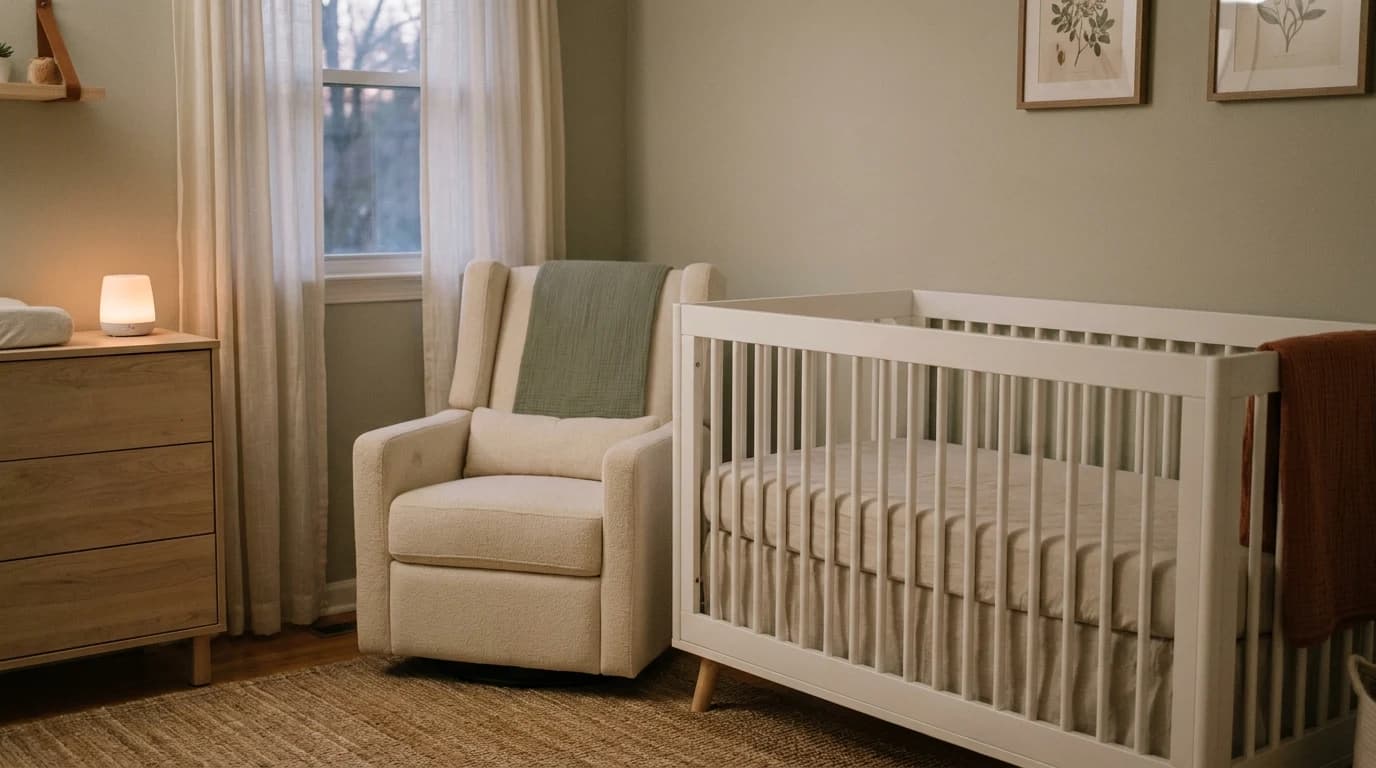
The room is not the risk: a six-month-old in a proper crib down the hall, on a back, on a firm mattress, with nothing else in the crib, is in a safe sleep setup.
The genuinely dangerous shortcut is the opposite move: pulling the baby into your bed because the back-and-forth is exhausting. Room-sharing means a separate surface in your room, not your mattress. Couches and armchairs are never safe sleep surfaces for a baby, and falling asleep with a baby while feeding on one is one of the highest-risk situations there is. If you are too tired to keep crossing the hall:
- The answer: move the crib closer, or move the baby into their own room sooner once you are past six months.
- Not the answer: pulling the baby into your bed, or falling asleep with the baby on couches or armchairs.
The second mistake is "graduating" the crib by adding comfort items. A bigger room can make a bare crib feel stark, and the temptation to add a pillow, a blanket, or a bumper grows. The rule does not change with the room: until the first birthday, the only thing in the crib is a fitted sheet on the mattress. Soft objects, loose bedding, and bumpers are linked to suffocation, entrapment, and strangulation, full stop.
How to make the move smoother
If you have cleared six months and decided to move, a few practical steps help:
- Keep the rest of the routine identical. Same wind-down, same swaddle-or-sack, same sound machine, same lights-out time. Change one variable, not five. Our guide on building a bedtime routine that actually works walks through a repeatable sequence.
- Reset the safe-sleep basics in the new room. Firm flat crib mattress, fitted sheet only, back sleeping, room not too warm. The full checklist is in our safe sleep environment guide.
- Set up the monitor before the first night, with the camera angled for a full crib view and good night vision, so you are not troubleshooting at 2 a.m. See our baby monitor picks if you still need one.
- Expect a few rough nights. A new room is a new variable, and short-term protest is normal. It usually settles within a week if the routine stays consistent.
If your baby is still in a bassinet and you are not sure whether the next step is a crib in your room or a crib in the nursery, our bassinet-to-crib timing guide covers that handoff.
The bottom line
Room-share on a separate surface for at least the first 6 months; longer is fine if it works for your family. Six months is the earliest the guidance clearly supports moving a healthy baby into their own room, and anywhere between six and twelve months is a reasonable, evidence-aligned choice based on how your household actually sleeps. Whatever room they are in, the safe-sleep rules don't change:
- Back sleeping
- Firm flat surface
- Fitted sheet only
- Nothing else in the crib
- Never the adult bed
Cribworthy researches and analyzes baby products and parenting topics using authoritative pediatric sources. This article is informational and is not a substitute for medical advice from your child's doctor.
Sources
- American Academy of Pediatrics, Sleep-Related Infant Deaths: Updated 2022 Recommendations (Pediatrics policy statement): room-sharing "ideally for at least the first 6 months," the ~50% SIDS reduction, and why sleep-related deaths are highest in the first 6 months.
- American Academy of Pediatrics (HealthyChildren.org), A Parent's Guide to Safe Sleep: room-sharing on a separate surface for at least the first 6 months, and the ~50% reduction in SIDS risk.
- American Academy of Pediatrics (HealthyChildren.org), Preventing SIDS: room-share "for at least 6 months, but preferably up to 1 year of age," and back sleeping for babies up to 1 year.
- Safe to Sleep (NIH/NICHD): share a room for at least the first 6 months, give baby their own separate sleep space, and the warning that couches and armchairs are never safe for baby sleep.
We white-knuckled it to almost a year because a relative kept insisting twelve months was the rule. Our pediatrician told us six months was the actual line and we'd been fine to move months ago. The transition took three rough nights and then everyone slept better. Wish we'd checked the real guidance sooner.
Paraphrased community consensus — not a direct quote.
The AAP says a baby must room-share for a full year.
The AAP’s 2022 policy recommends room-sharing "ideally for at least the first 6 months." Its parent site still suggests up to a year as the longer option. Sleep-related deaths are highest in the first 6 months, so a baby past six months moving to their own room is inside the guidance, not breaking it.
Moving the baby to their own room raises the SIDS risk.
The risky variable isn't the room, it's the surface. A baby past 6 months in a proper crib down the hall, on their back, on a firm mattress with only a fitted sheet, is in a safe setup. The genuinely high-risk move is the opposite: bringing the baby into the adult bed because crossing the hall is tiring.
Research Sources
Hilly Shore Inc.
Editorial teamIndependent product research team behind Cribworthy. Reviews are grounded in published AAP / CDC / NHTSA / CPSC pediatric guidance, JPMA / GREENGUARD GOLD / OEKO-TEX certification verification, and aggregated buyer sentiment.
124 products reviewed · 22 categories covered · cites AAP, CDC, NHTSA, CPSC, FDA, ACOG.
Safety claims are verified against published pediatric guidelines and CPSC databases. See our editorial standards.