Flying With a Baby: The Carry-On Plan by Flight Length
Quick Answer
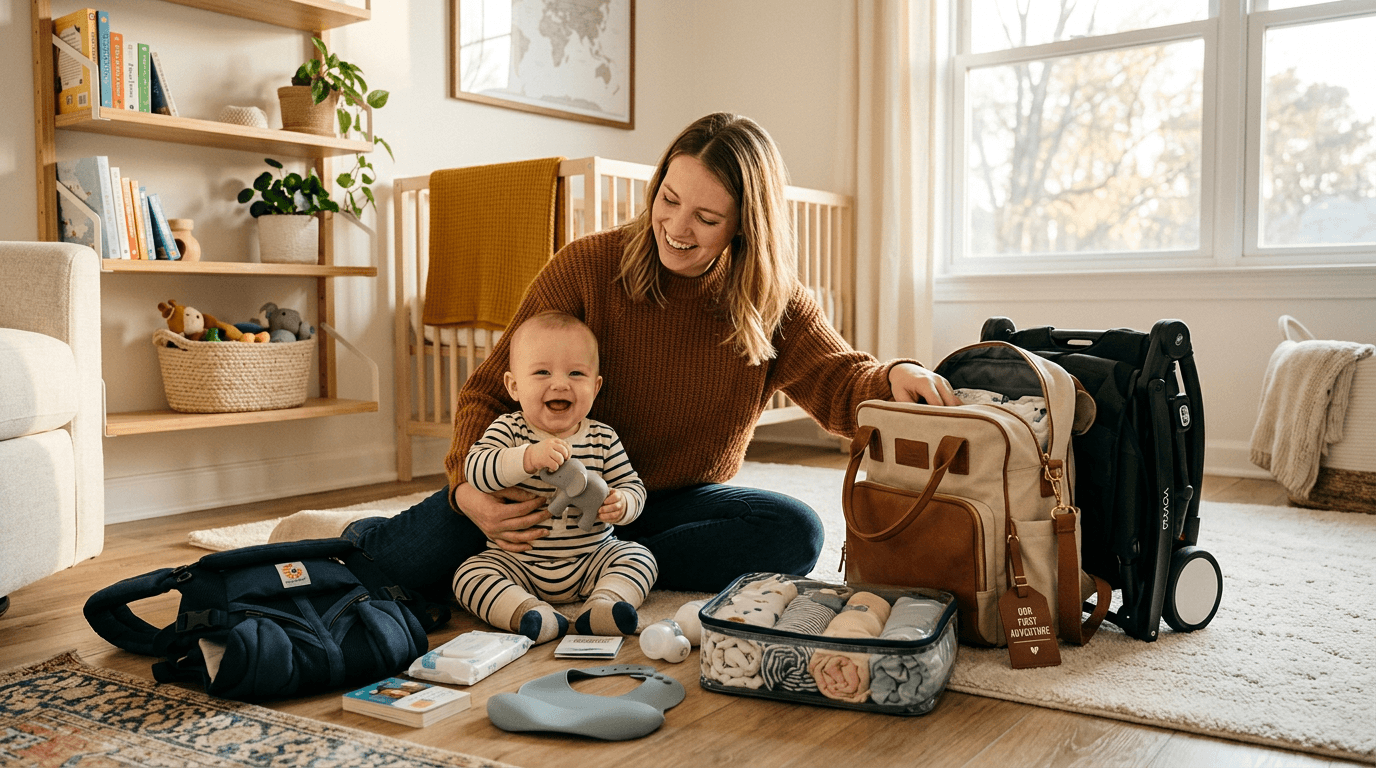
Pack the diaper bag for the hours you will be airborne, not for the trip. Under two hours needs diapers, one feed, one outfit change, and one toy; each added hour adds a feed, a diaper, and a backup layer. Formula, breast milk, and baby food are exempt from the TSA 3.4-ounce liquid limit as medically necessary liquids, ice packs included — declare them at the start of screening. And per the AAP, the safest place for a baby on a plane is their own seat in an FAA-approved car seat, with a feed timed to takeoff and landing for ear pressure.
Our Verdict
Build the carry-on from a flight-length matrix instead of a worst-case pile: airborne hours plus a two-hour delay buffer sets the diaper and feed count, and everything else flies checked. Declare feeding liquids over 3.4 ounces at screening, favor clear bottles over pouches, and spend your energy on the takeoff and descent windows, where a feed or pacifier does more for your baby than anything else in the bag.
Key Takeaways
- ✓Build the carry-on from a flight-length matrix instead of a worst-case pile: airborne hours plus a two-hour delay buffer sets the diaper and feed count, and everything else flies checked. Declare feeding liquids over 3.4 ounces at screening, favor clear bottles over pouches, and spend your energy on the takeoff and descent windows, where a feed or pacifier does more for your baby than anything else in the bag.
- ✓Pack the diaper bag for the number of hours you will be airborne, not for the trip. A flight under two hours needs diapers, one feed, one outfit change, and one small toy — nothing else earns its place.
- ✓Pack by flight hours, not trip days. Everything beyond the airborne window plus a two-hour delay buffer belongs in checked luggage.
- ✓Most packing lists treat a 90-minute hop and a 10-hour transatlantic the same way, which is how parents end up hauling an overstuffed diaper bag through security for a flight shorter than a nap.
- ✓This is the part of flying with a baby that parents misread most, so here it is straight from the TSA's own screening rules:
As an Amazon Associate I earn from qualifying purchases. Product prices and availability are subject to change.
Quick answer
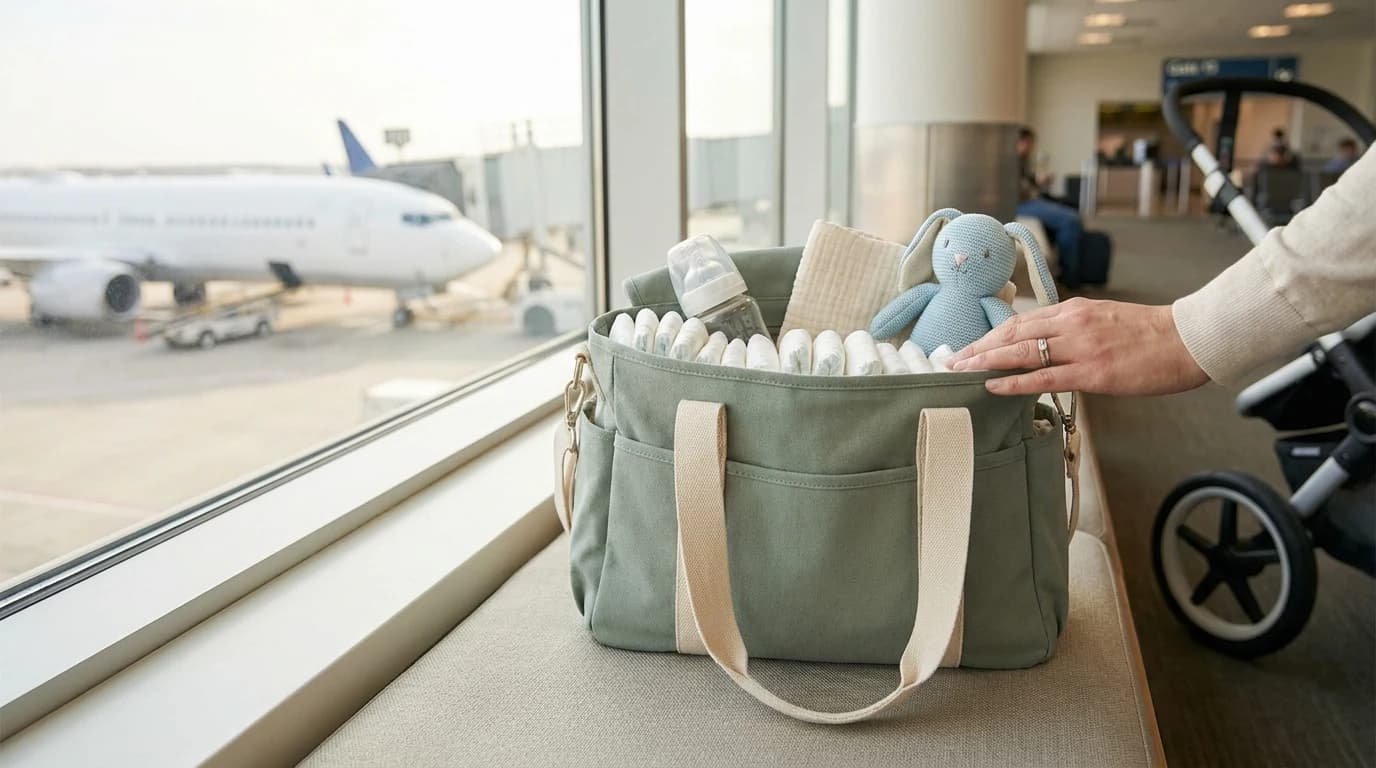
Pack the diaper bag for the number of hours you will be airborne, not for the trip. A flight under two hours needs diapers, one feed, one outfit change, and one small toy — nothing else earns its place. Every added hour adds a feed, a diaper, and a backup layer, and only true long-hauls justify extras like a full change of clothes for you. The one rule that never changes: formula, breast milk, and baby food are exempt from the TSA's 3.4-ounce liquid limit, so bring what your baby actually drinks and declare it at screening.
Key takeaways
- Pack by flight hours, not trip days. Everything beyond the airborne window plus a two-hour delay buffer belongs in checked luggage.
- The TSA liquid rule does not apply to baby feeding. Formula, breast milk, toddler drinks, and puree pouches over 3.4 oz are allowed in carry-on as medically necessary liquids — ice packs included.
- The AAP recommends a seat, not a lap. Turbulence is the leading cause of injuries to children on airplanes, and a lap hold is hard to keep when the plane shudders.
- Feed on takeoff and landing. Sucking — breast, bottle, or pacifier — is the AAP-endorsed fix for pressure-change ear pain.
The carry-on matrix: what earns a spot, by flight length
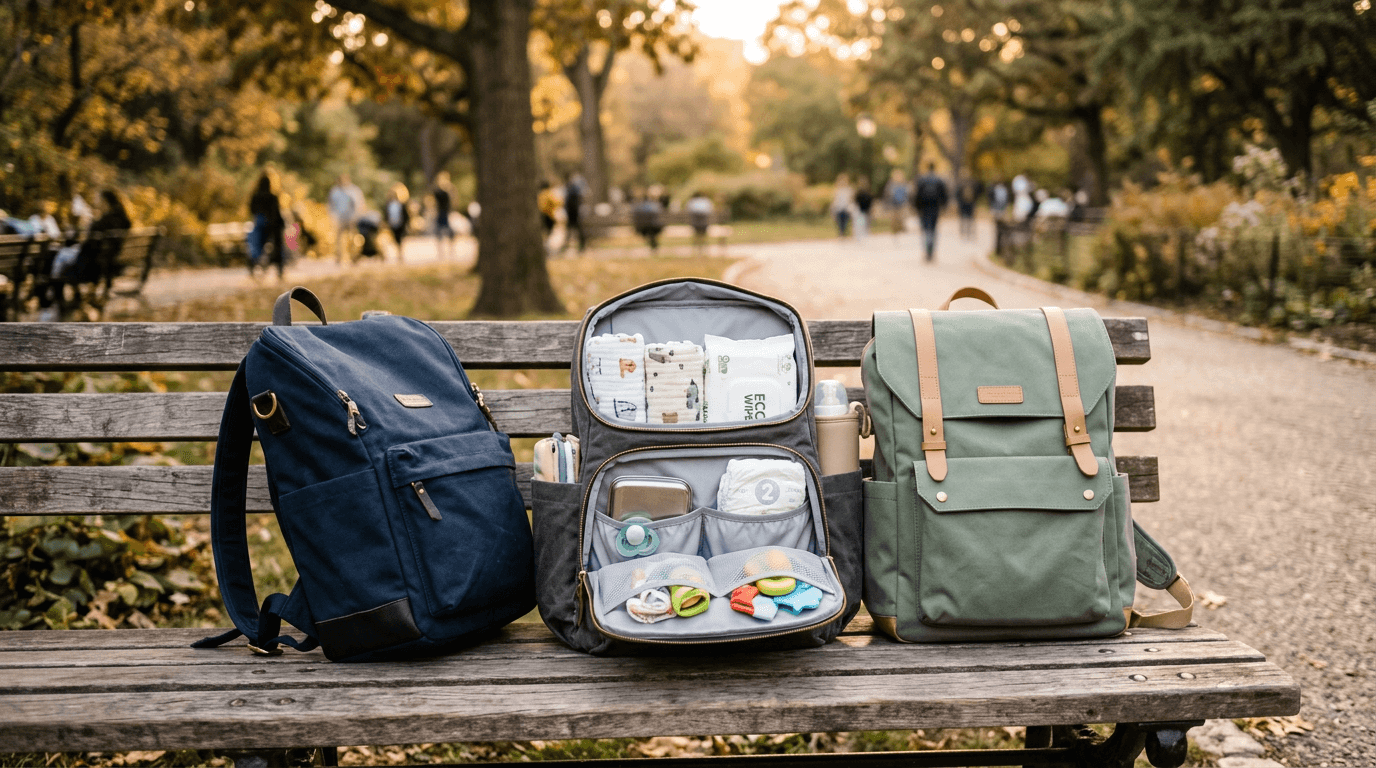
Most packing lists treat a 90-minute hop and a 10-hour transatlantic the same way, which is how parents end up hauling an overstuffed diaper bag through security for a flight shorter than a nap. Here is what actually earns cabin space:
| Item | Under 2 hours | 2–5 hours | 6+ hours |
|---|---|---|---|
| Diapers | 3–4 | 6–8 | 10–12 |
| Feeds (bottles or nursing sessions) | 1 | 2–3 | 4+ plus a backup |
| Baby outfit changes | 1 | 2 | 2–3 |
| Shirt change for you | Skip | Optional | Yes — one blowout on hour two says so |
| Toys / novelty | 1 small | 2, revealed one at a time | 3, plus a new-to-baby cheap one |
| Portable changing pad | Yes | Yes | Yes |
| Zip bags for soiled clothes | 1 | 2 | 3 |
| Baby carrier | Optional | Yes — hands free at the gate | Yes — walk-the-aisle insurance |
Count each row against the hours in the air plus a two-hour delay buffer. That buffer is the honest reason to round diapers up, not "just in case" thinking that doubles the bag. If babywearing through the airport is new to you, our safe babywearing guide covers positioning before you try it in a security line. For the changing pad row, our portable changing pads comparison lists sizes and packed weights.
The TSA formula and breast milk rules, exactly
This is the part of flying with a baby that parents misread most, so here it is straight from the TSA's own screening rules:
The exemption is broad. Formula, breast milk, toddler drinks, and baby or toddler food — including puree pouches — in quantities greater than 3.4 oz are allowed in carry-on bags and do not need to fit in the quart-sized liquids bag. They count as medically necessary liquids. The same applies to ice packs, freezer packs, and gel packs used to keep milk cold — and your baby does not even need to be traveling with you for milk and formula to qualify.
Three practical moves make the screening itself painless. First, tell the officer at the start of screening that you are carrying feeding liquids over 3.4 oz. Second, pull those items out of the bag so they can be screened separately. Third, the TSA recommends clear, translucent bottles rather than plastic bags or pouches — bottle liquid scanners cannot always read pouches, and unreadable containers may trigger slower alternate screening.
Seat, lap, and the gear that gets you there
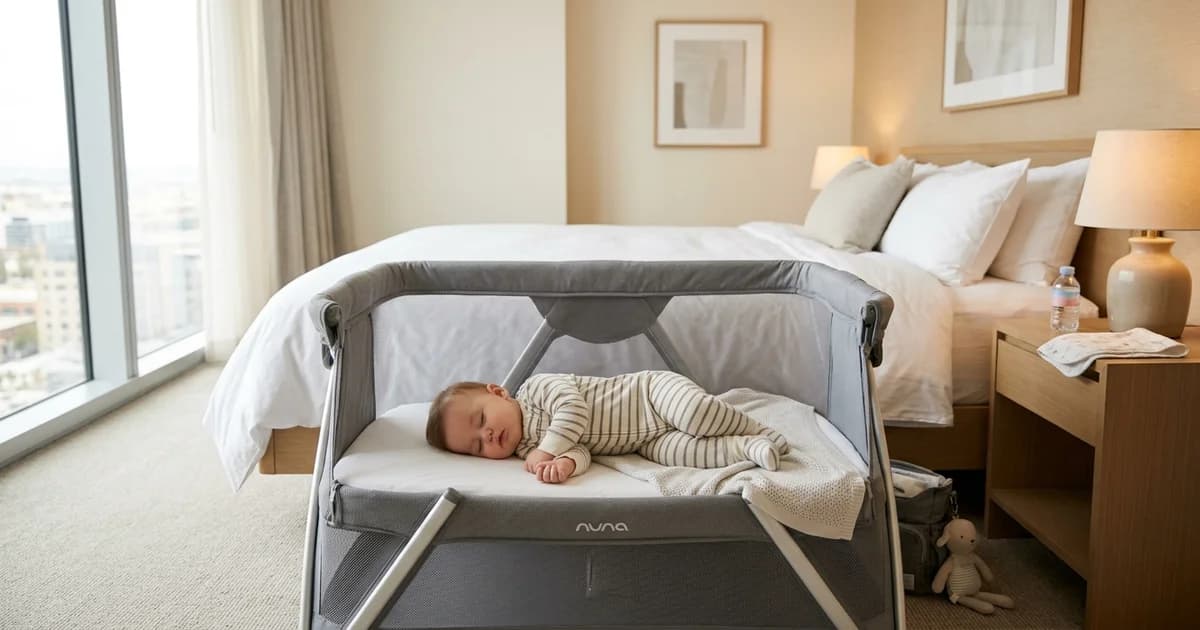
The FAA does not require a ticket for a child under 2, but the AAP's advice is unambiguous: a lap is not a restraint. Studies show parents cannot reliably keep a grip on a baby when the plane rocks, and turbulence is the leading cause of injuries to children on airplanes. If you can, buy the seat and bring an FAA-approved car seat; if you cannot, ask at the gate about empty seats. Which seat to bring, gate-checking, and the road-trip half of the equation are covered in our complete baby travel guide, and if the destination gear list includes overnight sleep, our travel crib comparison sorts that out.
One planning note that saves money before you ever pack: flights with a baby are cheapest when the trip itself is designed around off-peak, low-cost destinations, and these budget family vacation ideas are a good starting point for picking a trip the carry-on plan can actually serve.
What most parents get wrong
The instinct is to pack the diaper bag for worst-case everything — and the result is a bag so full you cannot find the one thing you need during a mid-flight change. The research-backed reality is the opposite: the cabin bag only has to cover the airborne hours plus a delay buffer, because everything else is solvable at your destination. The other common miss is timing: parents brace for cruising altitude, but the hard minutes are takeoff and descent, when pressure changes hurt small ears. The fix costs nothing — time a feed or offer a pacifier for those two windows, exactly as the AAP advises.
The bottom line
Build the bag from the matrix, declare your feeding liquids, and spend your planning energy on the two pressure-change windows rather than the hours in between. A baby's first flight is a logistics problem, and logistics problems reward short, specific lists over big bags.
Does the 3.4 oz liquid rule apply to baby formula and breast milk?
No. The TSA classifies formula, breast milk, toddler drinks, and baby food — including pouches — as medically necessary liquids. Quantities over 3.4 oz are allowed in carry-on, along with ice and gel packs to keep them cold. Declare them at the start of screening.
How old should a baby be before flying?
The AAP says flying is generally safe once a newborn is at least 7 days old, but ideally wait until 2 to 3 months. Airports and cabins are crowded, and a newborn's risk of catching an illness is higher in those early weeks.
Does my baby need their own plane seat?
The FAA allows under-2s to ride on a lap, but the AAP recommends a purchased seat with an FAA-approved car seat installed. Turbulence is the leading cause of injuries to children on airplanes, and arms are not a restraint system.
Sources
Research Sources
Hilly Shore Inc.
Editorial teamIndependent product research team behind Cribworthy. Reviews are grounded in published AAP / CDC / NHTSA / CPSC pediatric guidance, JPMA / GREENGUARD GOLD / OEKO-TEX certification verification, and aggregated buyer sentiment.
115 products reviewed · 20 categories covered · cites AAP, CDC, NHTSA, CPSC, FDA, ACOG.
Safety claims are verified against published pediatric guidelines and CPSC databases. See our editorial standards.