Baby Formula Brands, Decoded: What You're Paying For
Quick Answer
There are so many baby formula brands because the FDA does not approve formulas before they are sold; it sets minimum nutrient requirements that every brand must meet. That means store brands, national brands, and properly imported brands all clear the same legal floor. A premium price mostly buys marketing, packaging, and sometimes one added ingredient, not a higher safety or nutrition bar. For a healthy, full-term baby on standard cow's-milk formula, the cheapest option in the right category is a legitimate choice. Paying more is genuinely worth it only for specialty types your pediatrician recommends, such as hypoallergenic, amino-acid, or soy formulas for specific medical needs.
Our Verdict
The formula aisle is built to make the expensive tin feel like the safe choice, but every U.S. formula meets the same FDA nutrient floor. Choose the formula type your baby needs, not the brand; in the standard cow's-milk category, store brands are equivalent nutrition for less money. Reserve the premium for genuine specialty formulas a pediatrician prescribes, buy imported brands only from regular retail, and let the brand name be the least important factor on the shelf.
Key Takeaways
- ✓The formula aisle is built to make the expensive tin feel like the safe choice, but every U.S. formula meets the same FDA nutrient floor. Choose the formula type your baby needs, not the brand; in the standard cow's-milk category, store brands are equivalent nutrition for less money. Reserve the premium for genuine specialty formulas a pediatrician prescribes, buy imported brands only from regular retail, and let the brand name be the least important factor on the shelf.
- ✓Every infant formula sold in the U.S. clears the same legal floor. The FDA sets minimum (and some maximum) nutrient levels, and every brand — name-brand, store-brand, or imported — must meet them. ...
- ✓Here's the fact that reframes the entire aisle. The FDA does not approve infant formulas before they go on sale. What it does is require that every formula marketed in the U.S. meets federal nutrie...
- ✓Once you stop ranking by price, the aisle organizes by *what kind* of formula it is, not how premium it feels.
- ✓Brand premium is mostly noise. *Formula type* premium often isn't:
As an Amazon Associate I earn from qualifying purchases. Product prices and availability are subject to change.
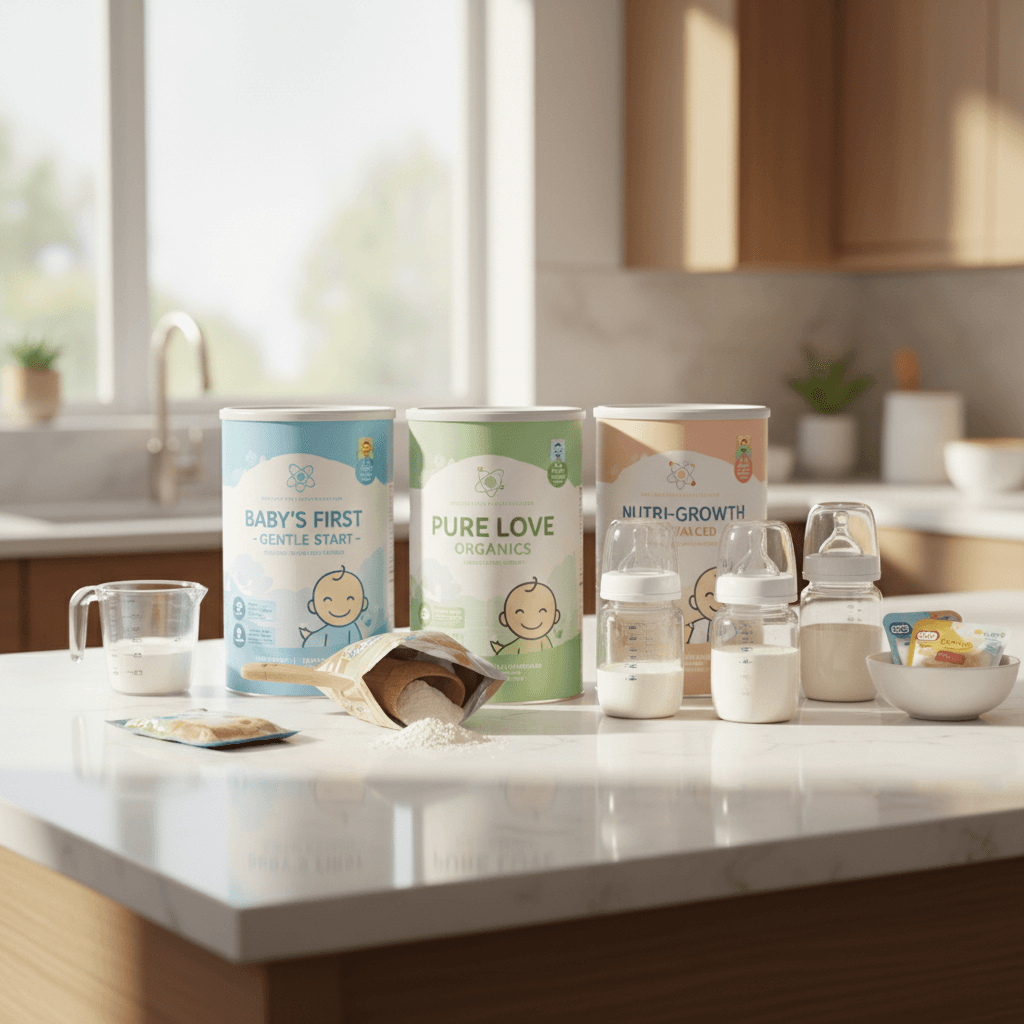
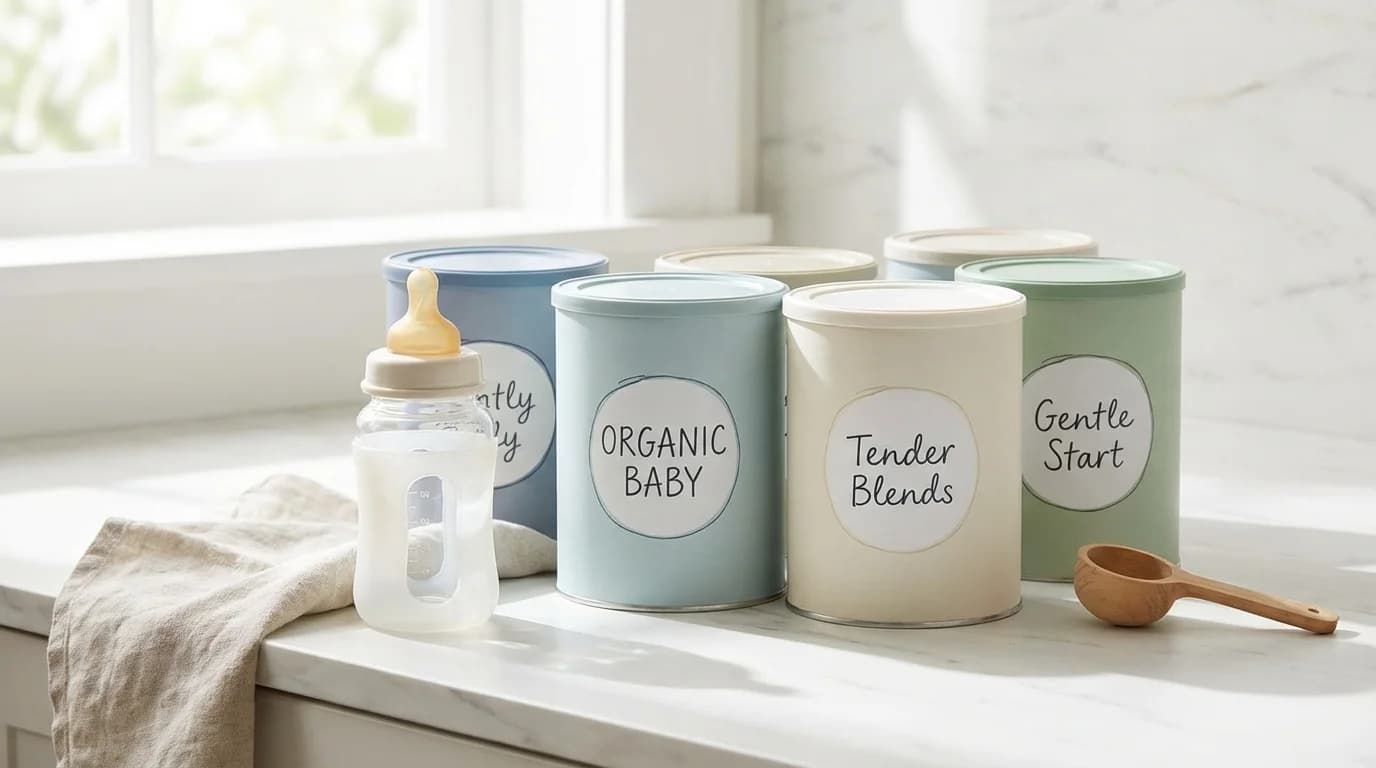
Walk down the formula aisle and the message is loud: premium tins with gold lettering, "European-inspired," "closest to breast milk," priced two and three times above the plain store-brand tub a shelf over. Then there are brands you've genuinely never heard of, sitting right next to Enfamil and Similac. It's easy to read the price tag as a safety ranking. It mostly isn't.
This is a map of the brand landscape, not a list of picks. For a head-to-head of specific products, read our best baby formula comparison. To decode a single label, start with types of baby formula explained. This post answers the question underneath them: why so many brands, and what does the expensive one actually get you?
Quick takeaways
- Every infant formula sold in the U.S. clears the same legal floor. The FDA sets minimum (and some maximum) nutrient levels, and every brand — name-brand, store-brand, or imported — must meet them. The premium tin and the cheap tub start from the same requirements.
- The FDA does not "approve" any formula before it's sold. Manufacturers must notify the FDA before marketing and meet federal nutrient rules; there's no gold-star approval that pricier brands have and cheaper ones don't.
- Store brands are usually the same milk-protein formula at a fraction of the price. The premium for a name brand mostly buys marketing and packaging — not a higher safety bar.
- "Unfamiliar" brands aren't sketchy by default. Many are properly imported formulas cleared for U.S. sale. The real rule is how you buy them, not whether the logo is famous.
The fact that levels the playing field: the FDA floor
Here's the fact that reframes the entire aisle. The FDA does not approve infant formulas before they go on sale. What it does is require that every formula marketed in the U.S. meets federal nutrient requirements, and that manufacturers notify the agency before selling a new or reformulated product. A formula that doesn't provide the required assurances is legally "adulterated," and the FDA can pull it.
In plain terms: there's a legal minimum (and, for some nutrients, a maximum) that every brand has to hit. The store brand hits it. The premium tin hits it. The imported brand that cleared U.S. import hits it. The FDA also notes manufacturers typically set their own levels above the federal minimums to protect label claims over shelf life — but that's true across the price spectrum, not a premium-only feature.
So when a brand says "meets all FDA requirements," that's not a selling point. It's the price of admission. Everything on the shelf says it.
How the brands actually sort out
Once you stop ranking by price, the aisle organizes by what kind of formula it is, not how premium it feels.
| Brand tier | What it usually is | What the premium buys |
|---|---|---|
| National name brands | Cow's-milk-based, iron-fortified (most formula sold) | Recognition, availability, marketing, some added ingredients |
| Store / generic brands | Same cow's-milk category, same nutrient floor | Almost nothing extra — lower price for equivalent core nutrition |
| Organic brands | Cow's-milk-based with organic-certified ingredients | The organic certification; nutritionally meets the same floor |
| Imported / European | Cow's or goat's milk; "Stage 1 / Stage 2" labeling | A different formulation style; properly imported ones meet U.S. standards |
| Specialty (hydrolyzed, soy, amino-acid) | For specific medical needs — allergy, intolerance | A genuinely different product — and a much higher price |
The first two rows are where most families overspend. A national brand and a store brand in the cow's-milk category are, at the level the FDA regulates, the same kind of product meeting the same requirements. Cow's-milk-based formula makes up the majority of what's sold; the AAP describes it as milk substantially modified — protein made more digestible, lactose adjusted toward breast-milk levels, butterfat swapped for digestible vegetable oils. Every brand in that row starts from the same playbook.
🎯 What most people get wrong: treating price as a proxy for safety or nutrition. It isn't. The expensive tin and the store brand clear the identical federal floor. The premium pays for the brand and the box — not a healthier baby. The real exception is genuine specialty formula (hydrolyzed, amino-acid, soy for specific conditions), which costs more for real reasons.
What about the brands you've never heard of?
After the 2022 shortage, the U.S. imported several formula brands not previously sold here, and many stuck around — including goat's-milk-based formulas the FDA previously didn't permit. That's why an unfamiliar logo can sit right next to the household names.
The AAP's guidance is reassuring but specific. If imported formula is on the shelf at your store or pharmacy, it has gone through the process to be sold here. A few differences to expect that aren't problems:
- "Stage 1" and "Stage 2" labels. Stage 1 is for the first 6 months (and generally fine through the first year); Stage 2 is meant for 6–12 months.
- Lower iron content on many European brands. Europe's iron rules differ from the U.S.; the AAP notes there's still plenty of iron, and you don't need a supplement unless your pediatrician says so.
- Metric mixing instructions (milliliters, "teat" instead of nipple). Follow them precisely — getting the water-to-powder ratio wrong is the real risk, not the brand.
The hard line the AAP draws: don't import formula yourself directly. If you buy from a third party online and it bypassed proper U.S. import channels, you can't be sure it meets U.S. safety standards. Buy imported brands from regular retail, not a reseller.
Where paying more is actually worth it
Brand premium is mostly noise. Formula type premium often isn't:
- Hypoallergenic (extensively hydrolyzed) formulas. The AAP notes these cost more than regular formulas — because the protein is broken down for babies with allergies. If your pediatrician recommends one, the price buys a genuinely different product.
- Specialty medical formulas (amino-acid/elemental, lactose-free for galactosemia). Necessary for specific conditions, prescribed for a reason.
- Soy formula — but be skeptical. The AAP says there are few circumstances where soy should be chosen over cow's-milk formula, calls these formulas "expensive," and notes they're "often widely overused." Up to half of babies with cow's-milk allergy also react to soy, so soy isn't a reliable allergy fix.
A money-saver worth naming: those "toddler" milks marketed as a next step. The AAP is blunt that they aren't needed to meet a child's nutritional needs and often add sugar, salt, or protein your toddler doesn't require. Don't feed toddler "formula" to a baby under 12 months — and you can usually skip it entirely.
How to actually choose a brand
Strip away the marketing and the decision gets short:
- Start with the type your baby needs, not the brand. For most healthy, full-term babies that's a standard iron-fortified cow's-milk formula — the category where store brands shine.
- If everything's going well, the cheapest formula in the right category is legitimate. Same floor, same core nutrition, less money. To compare specific picks, see best baby formula comparison; for organic, best organic baby formula.
- Switch only for a real reason — symptoms, a pediatrician's advice, supply — and do it gradually so you don't blame the brand for a normal adjustment. Our guide on how to switch baby formula safely walks through it.
- Let your pediatrician make the specialty calls. Allergy, intolerance, prematurity — that's where the price tag stops being marketing and starts being medicine.
The reassuring bottom line: the aisle is engineered to make you feel like the expensive choice is the safe choice. The regulations say otherwise. Pick the type your baby needs, buy it from a regular store, mix it exactly as directed, and let the brand be the least important variable on the shelf.
Sources
- Questions & Answers for Consumers Concerning Infant Formula — U.S. Food and Drug Administration
- Choosing an Infant Formula — HealthyChildren.org (American Academy of Pediatrics)
- Why Are We Seeing Baby Formula Brands From Companies I Haven't Heard Of? — HealthyChildren.org (American Academy of Pediatrics)
Research Sources
- Questions & Answers for Consumers Concerning Infant Formula — U.S. Food and Drug Administration
- Choosing an Infant Formula — HealthyChildren.org (American Academy of Pediatrics)
- Why Are We Seeing Baby Formula Brands From Companies I Haven't Heard Of? — HealthyChildren.org (American Academy of Pediatrics)
Hilly Shore Inc.
Editorial teamIndependent product research team behind Cribworthy. Reviews are grounded in published AAP / CDC / NHTSA / CPSC pediatric guidance, JPMA / GREENGUARD GOLD / OEKO-TEX certification verification, and aggregated buyer sentiment.
115 products reviewed · 20 categories covered · cites AAP, CDC, NHTSA, CPSC, FDA, ACOG.
Safety claims are verified against published pediatric guidelines and CPSC databases. See our editorial standards.