Best Wearable Breast Pump 2026: Willow Go vs Elvie vs Medela
The Verdict
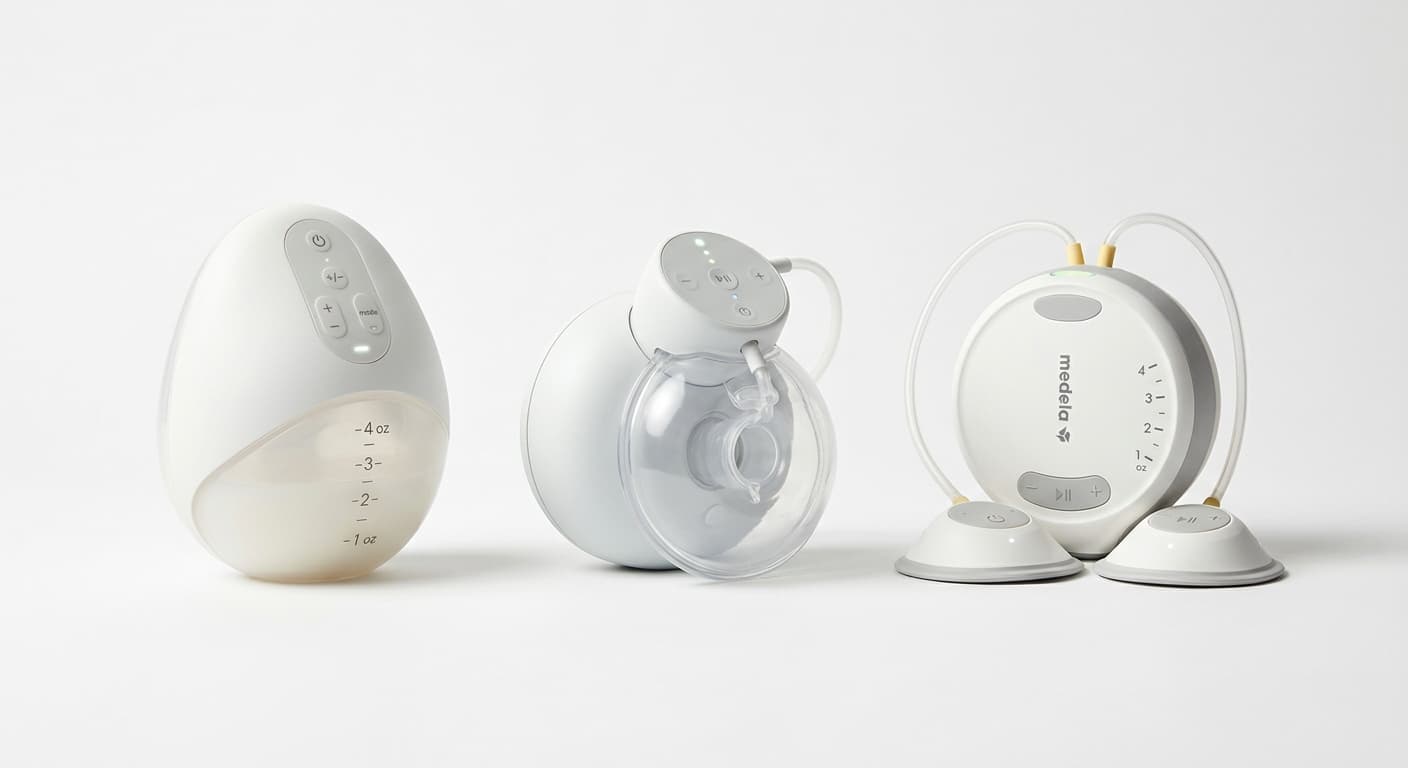
Willow Go ($199.99) is the right pick for most people: it costs less than the alternatives, uses a simple two-part cup, and pumps well enough for daily use. Elvie is the quietest and most discreet, and also the priciest. Medela Freestyle Hands-Free is the one insurance most often covers outright, which can make it effectively free. Check your plan before spending anything.
Our Verdict
Go through your insurance supplier first — the Affordable Care Act requires plan coverage of a pump, so if Medela is what your plan stocks, that option arrives at no cost. Pay out of pocket for Willow Go only if you want the lower price and fewer parts to wash, and for Elvie only if silence at your desk is the whole point. Most parents keep a plug-in double pump for the highest-output session and use the wearable for the rest of the day.
Swipe to compare every product.
| Comparison field | #1Willow Go Owner rating | #2Elvie Stride Owner rating | #3Medela Freestyle Hands-Free Owner rating |
|---|---|---|---|
| Verdict | |||
| Price | List Price: | List Price: | Typical price: |
| Type | In-bra wearable (cordless) | Wearable cups + small hub | Wearable cups + portable motor |
| Discretion | Fully hidden in bra | Cups in bra, thin tube to clip-on hub | Cups in bra, tube to pocket-size motor |
| Suction | 3 modes | Hospital-grade | Medela 2-Phase Expression |
| Battery | ~2 hrs / 5 sessions | ~2.5 hrs | ~2 hrs |
| Capacity | 5 oz per side | 5 oz per side | Varies |
| Insurance | Often covered (+ upgrade) | Often covered | Often covered |
| Buyer sentiment | Quality Ease of cleaning Ease of use Reliability Suction Value for money Buyers praise quality, ease of cleaning and ease of use. Some flag reliability and suction. Based on 803 user mentions | Suction Value for money Leakage Mixed feedback on reliability and effectiveness. Some flag suction and value for money. Based on 1,026 user mentions | Pump quality Effectiveness Ease of cleaning Portability Reliability Suction Value for money Buyers praise pump quality, effectiveness, ease of cleaning and portability. Some flag reliability and suction. Based on 953 user mentions |
| Pros |
|
|
|
| Cons |
|
|
|
* Prices are approximate. Check the linked retailer for current pricing and availability.
Key Takeaways
- ✓Wearable breast pumps have revolutionized pumping. No more sitting tethered to an outlet — these fit in a nursing bra and let you pump discreetly anywhere.
- ✓Quick verdict: Willow Go has the best balance of price, reliability, and features for most parents. Elvie is the quietest but most expensive. Medela is the most insurance-friendly (often covered free).
- ✓Check your insurance first. Most US insurance covers one breast pump free through the Affordable Care Act. Aeroflow, Yummy Mummy, Edgepark, and Babylist are authorized suppliers.
- ✓Price: $299-349 (2nd generation, current model)
- ✓What it is: The original wearable pump. Slightly smaller than Willow Go and notably quieter. Collects in a reusable container inside the unit.
As an Amazon Associate I earn from qualifying purchases. Product prices and availability are subject to change.
Willow Go vs Elvie vs Medela Freestyle: Wearable Breast Pump Showdown 2026
Buy on Amazon · List Price:Wearable breast pumps have revolutionized pumping. No more sitting tethered to an outlet — these fit in a nursing bra and let you pump discreetly anywhere. This comparison covers the three leading options: Willow Go, Elvie, and Medela Freestyle Hands-Free.
TL;DR
| Pick | Best for | Price |
|---|---|---|
| Willow Go | Most parents wanting a reliable wearable | $299-349 |
| Elvie | Quietest operation, highest discretion | $449-499 |
| Medela Freestyle Hands-Free | Strong suction, reliable brand, insurance coverage | $399-449 |
Quick verdict: Willow Go has the best balance of price, reliability, and features for most parents. Elvie is the quietest but most expensive. Medela is the most insurance-friendly (often covered free).
Insurance coverage note
Check your insurance first. Most US insurance covers one breast pump free through the Affordable Care Act. Aeroflow, Yummy Mummy, Edgepark, and Babylist are authorized suppliers. Many insurance plans cover Medela pumps free and require an upgrade fee for Willow or Elvie (typically $100-250 out of pocket).
Coverage varies by plan. Call your insurance or ask Aeroflow 4-6 weeks before your due date.
Willow Go
Price: $299-349 (2nd generation, current model)
What it is: A wearable double electric pump that fits entirely in your nursing bra. Collects milk in disposable or reusable bags. App-connected for tracking.
What owners consistently say works
- Truly wearable — fits inside a standard nursing bra
- Quiet (~50 dB, can be used in meetings)
- Good suction — comparable to traditional pumps
- Simple controls on the unit
- Reusable containers available — more sustainable than Willow Classic
- More affordable than Elvie
- Works well for most breast shapes
What owners say doesn't work
- Learning curve on positioning — takes a few sessions to find the right fit
- Battery life (~5 pumping sessions per charge) — less than some competitors
- Some parents need specific flange sizes that aren't included
- App can be buggy at times
- Requires specific bra fit — not all nursing bras work
Elvie
Price: $449-499
What it is: The original wearable pump. Slightly smaller than Willow Go and notably quieter. Collects in a reusable container inside the unit.
Which Elvie we link: this section describes the fully in-bra Elvie Pump. The Elvie in our comparison table is the Elvie Stride (about $150), a different design: cups in the bra connect by thin tubes to a small hub on your waistband. Elvie has since released the Elvie Stride 2, which it describes as the same hospital-grade performance with redesigned soft silicone cups and six sizing options in the box, for about $270 on Amazon; the original Stride is still sold.
What owners consistently say works
- Quietest pump — virtually silent in use (perfect for meetings)
- Smallest footprint inside the bra
- Premium design and feel
- Good app with history and tracking
- Reusable containers built-in
- True "invisible" pumping — the least obvious
What owners say doesn't work
- Expensive — often the highest-priced option
- Weaker suction than Willow or Medela, per owner reports
- Lower milk output for some users (significant if you're trying to maintain supply)
- Setup is finickier than alternatives
- Smaller capacity (needs more frequent emptying)
Medela Freestyle Hands-Free
Buy on Amazon · Typical price:Price: $399-449
What it is: A wearable version of Medela's proven pump motor, in a wearable form factor. Most traditional milk expression performance in a wearable shell.
What owners consistently say works
- Strongest suction of the three — best for exclusive pumpers
- Highest milk output in most comparison tests
- Proven Medela motor — same tech as their traditional Sonata pump
- Often free through insurance (Medela is widely covered)
- Best for low supply concerns or exclusive pumpers
- Reliable brand with long customer support history
What owners say doesn't work
- Larger and louder than Elvie and Willow Go
- Less discreet — more noticeable under clothing
- Battery life varies by reports
- Less "invisible" — the shape shows through shirts
- More noticeable in quiet spaces (meetings, offices)
Head-to-head
Suction strength / milk output
- Medela Freestyle Hands-Free: Strongest. Best for maintaining supply.
- Willow Go: Strong. Comparable to traditional pumps.
- Elvie: Weakest of the three per most owner reports.
Winner: Medela Freestyle Hands-Free.
Discretion / noise level
- Elvie: Whisper-quiet. Nearly invisible under clothing.
- Willow Go: Quiet. Discreet in most situations.
- Medela Freestyle Hands-Free: Loudest. More noticeable in quiet rooms.
Winner: Elvie.
Price (out of pocket)
- Willow Go: $299 (cheapest)
- Medela Freestyle Hands-Free: $399
- Elvie: $449 (priciest)
Winner: Willow Go.
Insurance coverage
- Medela: Widely covered free
- Willow Go: Sometimes covered with upgrade fee ($100-200)
- Elvie: Usually covered with upgrade fee ($200-300)
Winner: Medela.
Battery life
- Medela Freestyle Hands-Free: Best in class (~6-8 sessions)
- Willow Go: Good (~5 sessions)
- Elvie: Good (~5 sessions)
Winner: Medela.
Fit / comfort
- Elvie: Smallest, most discreet fit
- Willow Go: Good fit for most
- Medela Freestyle Hands-Free: Larger footprint, less flexible fit
Winner: Elvie for discretion, Willow Go for most parents.
Which should you buy?
Pick Willow Go if:
- You want the best balance of price, performance, and discretion
- You're pumping occasionally to supplement breastfeeding
- Your insurance covers it partially or it's within budget
Pick Elvie if:
- You need the absolute quietest option (high-profile meetings, very quiet offices)
- Money is not the primary concern
- Discretion matters more than suction strength
- You have already-established milk supply (not relying on the pump to maintain supply)
Pick Medela Freestyle Hands-Free if:
- You're an exclusive pumper or have low supply concerns
- You want the strongest suction
- Your insurance covers Medela free
- You value the brand's decades-long reputation
Pick NONE of the above if:
- You're primarily home-pumping — a traditional Spectra S1 or Medela Pump in Style ($150-250) is stronger and cheaper
- You pump rarely — a simple hand pump or manual pump may suffice
Common wearable pump mistakes
-
Expecting wearables to replace traditional pumps for exclusive pumping. Some users find wearables can't maintain full supply. If you're exclusively pumping, keep a traditional pump as backup or primary.
-
Not getting the right flange size. Flange size matters enormously for comfort and output. Get fitted by a lactation consultant if possible.
-
Assuming the brand-name means better output for YOUR body. Individual response varies. Some people respond better to one pump than another, regardless of brand reputation.
-
Wearing the wrong bra. Wearable pumps need a supportive bra that holds them in place without compressing. Specific "pumping bras" are worth the $20-40.
-
Not charging before important events. Running out of battery mid-pump is demoralizing. Always charge before work days.
Tips for wearable pump success
- Get fitted for flange size — this is the #1 factor in output
- Buy a quality pumping bra — Simple Wishes or Kindred Bravely
- Practice at home before wearing in public/work
- Track sessions in the app to see your output patterns
- Clean parts thoroughly between uses
- Keep backup parts — things wear out
- Have a backup traditional pump for days when wearables fail
Bottom line
For most breastfeeding parents who want a wearable pump for work or on-the-go, the Willow Go is the best value. It's priced well, has strong performance, and is quiet enough for most situations.
If you need maximum output or your insurance covers Medela free, go with Medela Freestyle Hands-Free. If you need absolute silence for high-profile settings and have the budget, go with Elvie.
Whatever you pick, get fitted for flange size, get a quality pumping bra, and practice before relying on it at work.
Related reading:
Hilly Shore Inc.
Editorial teamIndependent product research team behind Cribworthy. Reviews are grounded in published AAP / CDC / NHTSA / CPSC pediatric guidance, JPMA / GREENGUARD GOLD / OEKO-TEX certification verification, and aggregated buyer sentiment.
122 products reviewed · 22 categories covered · cites AAP, CDC, NHTSA, CPSC, FDA, ACOG.
Safety claims are verified against published pediatric guidelines and CPSC databases. See our editorial standards.