The Complete Baby Gear Guide: Everything You Need (and Nothing You Don't)
Quick Answer
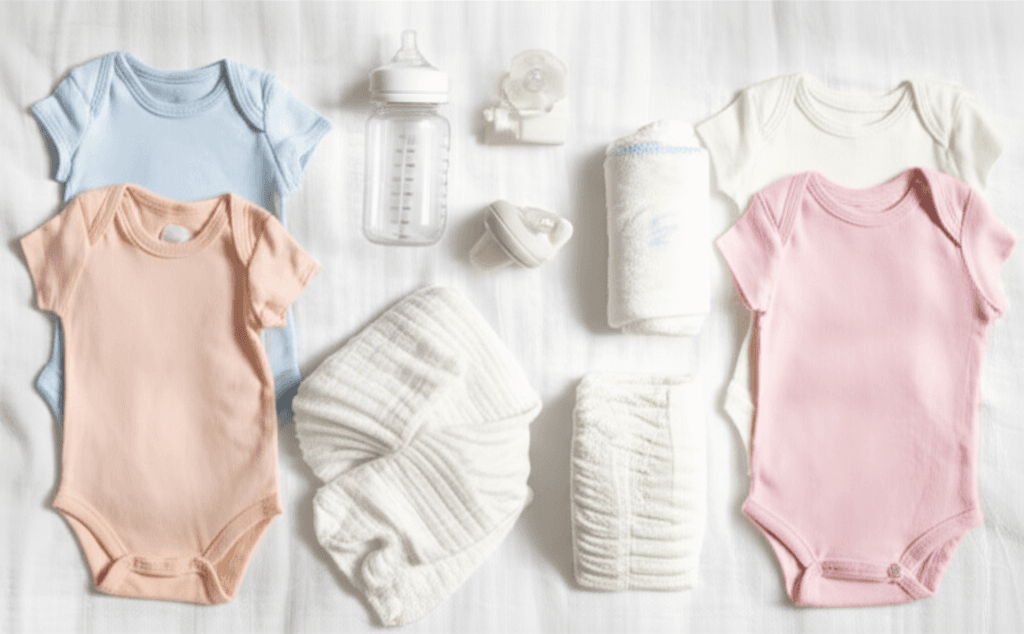
Six things matter before hospital discharge: a firm, flat sleep surface meeting current CPSC standards, an installed rear-facing car seat, a way to feed — bottles or nursing gear — plus diapers, wipes, and clothes. Everything beyond that is optional until your particular baby tells you what they need. Build outward from the sleep surface, since it is the choice with real safety consequences.
Our Verdict
Sequence beats shopping. Settle the sleep space and the car seat, then wait — bouncer, carrier, high chair, and monitor all get easier to choose once you know whether your baby loves motion, hates being set down, or sleeps anywhere. Registry checklists run long because length sells, not because a newborn has 200 needs. Add items as they prove themselves.
Key Takeaways
- ✓Sequence beats shopping. Settle the sleep space and the car seat, then wait — bouncer, carrier, high chair, and monitor all get easier to choose once you know whether your baby loves motion, hates being set down, or sleeps anywhere. Registry checklists run long because length sells, not because a newborn has 200 needs. Add items as they prove themselves.
- ✓You need far fewer baby products than registry checklists suggest. Everything else can wait until you learn your specific baby's needs.
💬 Real Talk from Parents
Every parent's 'essential' list is different because every baby is different.
Your most-used baby item will be something you almost didn't buy.
The registry checklist is a starting point, not a shopping list.
Your second kid will use half the gear and be twice as chill about it.
The best baby gear advice I got: ask parents of 2+ kids what they'd buy again. First-time parents buy everything. Second-timers know what actually matters.
Paraphrased community consensus — not a direct quote.
You need everything on the registry checklist before baby arrives.
Most babies need surprisingly little: a safe sleep space, car seat, diapers, feeding supplies, and a few outfits. Everything else can be bought as needed after you learn your baby's preferences.
More expensive baby gear means better quality.
Many mid-range products match or outperform premium ones in safety tests and durability. Price often reflects brand name and aesthetics, not actual performance. Read reviews, not price tags.
As an Amazon Associate I earn from qualifying purchases. Product prices and availability are subject to change.
The Complete Baby Gear Guide: Everything You Need (and Nothing You Don't)
You need far fewer baby products than registry checklists suggest. Everything else can wait until you learn your specific baby's needs.
| Category | What you actually need |
|---|---|
| Sleep | A safe crib or bassinet — a firm, flat surface meeting current CPSC standards |
| Transport | A properly installed car seat |
| Feeding | Bottles or nursing gear |
| Diapering | Diapers |
| Clothing | Clothes |
| Everything else | Optional until you discover your specific baby's needs |
This guide walks you through every major category — sleep, feeding, diapering, transport, bathing, and play — with links to our in-depth reviews so you can build a confident, budget-appropriate gear list without the overwhelm.
What should parents know before buying any baby gear?
Before you open a single browser tab to shop, here are the principles that will save you money and stress:
- Start with the essentials, add as you go. That bouncer your friend swears by? Your baby might hate it. The $400 smart monitor? A basic video monitor might be all you need
- Borrow before you buy. Babies outgrow gear fast — borrow from friends, check local buy-nothing groups, rent specialty items
- Ignore the marketing, read real reviews. We synthesize expert testing and real parent feedback, not sponsored content
The two exceptions to borrowing: Car seats, which you should buy new for safety, and cribs, which must meet current safety standards. Check our honest approach to what you actually need versus what you don't before building your list.
For a streamlined list of day-one essentials, start with our newborn essentials checklist — it covers exactly what to have ready before baby arrives.
What sleep gear does your baby actually need?
Newborn sleep dominates the first year of parenting, and safe sleepsafe sleepAAP guideline: baby sleeps Alone (no blankets, pillows, bumpers, or toys), on their Back, in a Crib or bassinet with a firm flat mattress. Room-sharing without bed-sharing is recommended for the first 6-12 months. gear is non-negotiable.
The one non-negotiable: A firm, flat sleep surface that meets current CPSCCPSCThe US federal agency that issues product recalls and enforces safety standards on cribs, strollers, car seats, and other juvenile products. standards. Full stop.
According to the AAP's 2022 updated policy statement on safe sleep, infants should always be placed on their back on a firm, flat surface free of soft bedding, and the sleep surface should conform to CPSC safety standards. The CPSC reported 136 crib-related fatalities in 2022, the vast majority involving soft bedding or non-compliant products.
Cribs and bassinets are your starting point. A bassinet keeps baby close for nighttime feeds during the first few months, then you'll transition to a crib. We've researched dozens and our best cribs and bassinets guide covers every budget. For safe setup details, read our guide on how to set up a safe sleep space.
Sleep accessories make a real difference. The trifecta of better newborn sleep:
- A quality white noise machine
- The right swaddle
- Room-darkening curtains Our best sleep essentials roundup covers white noise machines, swaddles, and sleep sacks. If you're struggling with sleep regressions, our sleep regression survival guide is one of our most-read posts for good reason.
What feeding gear should you have ready?
Whether you breastfeed, formula feed, or do a combination, you'll need bottles — even exclusively breastfeeding parents eventually need them for pumped milk or when they return to work.
The WHO recommends exclusive breastfeeding for the first six months of life, with continued breastfeeding alongside complementary foods up to two years or beyond. The AAP echoes this recommendation while noting that infant formula is a safe, nutritionally complete alternative when breastfeeding is not possible (AAP Policy Statement on Breastfeeding, 2022).
The bottle landscape is confusing, but our best feeding bottles guide breaks down anti-colic design, flow rates, and which bottles work best for different feeding styles. If you're navigating the breastfeeding-versus-formula decision, our honest formula vs breastfeeding guide lays out the facts without judgment.
For breastfeeding parents, a good nursing pillow and understanding how to introduce a bottle to a breastfed baby will make the transition to combo feeding much smoother. When baby is ready for solids (typically around 6 months), our guide to starting solid foods and best baby high chairs have you covered.
What diapering essentials do you actually need?
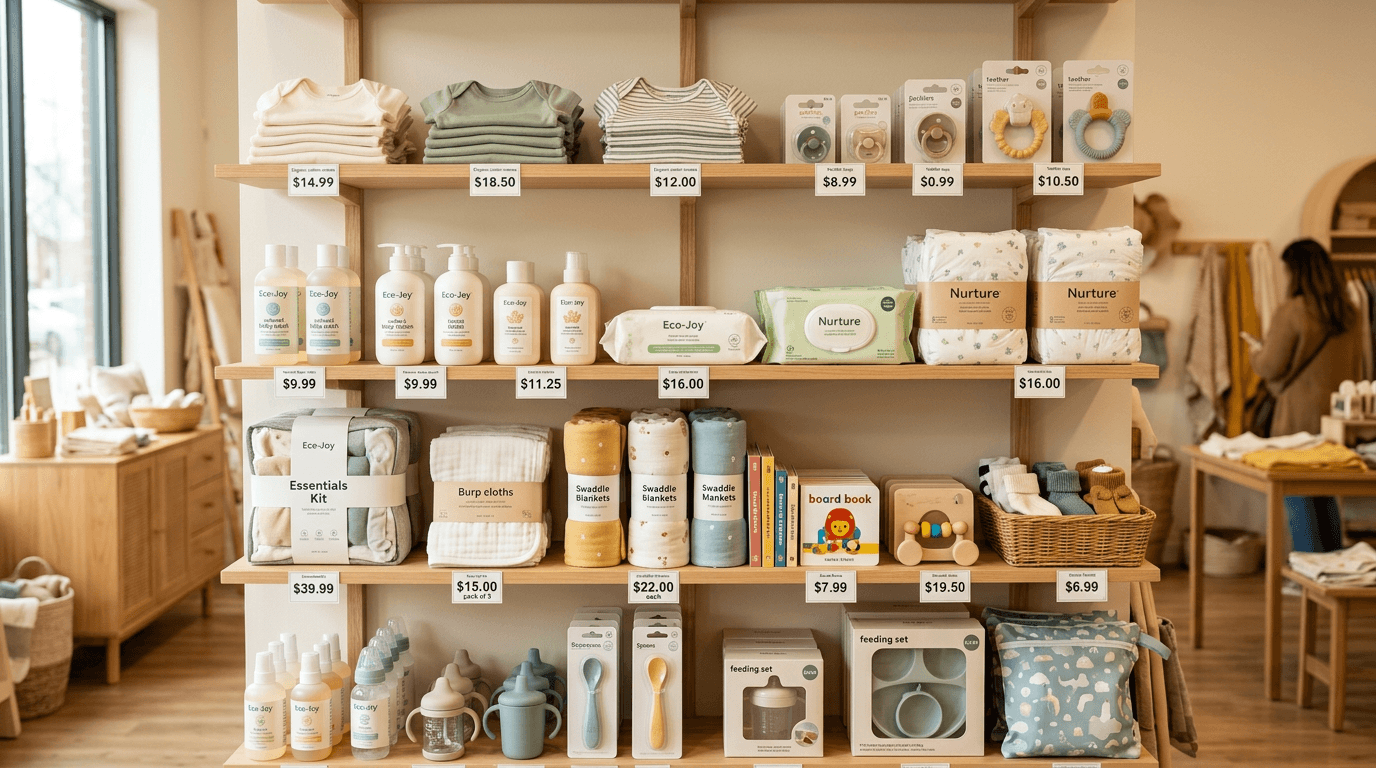
The scale of it: You'll change somewhere between 6,000 and 8,000 diapers in the first two years. The gear should make that painless, not add complexity. The core essentials:
- A good diaper bag that fits your lifestyle
- A reliable diaper cream for rash prevention
- A portable changing pad
The diaper bag debate (backpack vs. tote vs. messenger) comes down to personal preference, but most parents land on a backpack for the hands-free convenience. Look for:
- Wipeable interior lining
- Insulated bottle pockets
- Stroller straps For specific picks at every price point, check our best diaper bags roundup.
Don't overthink this one: A zinc-oxide-based cream handles most diaper rash, and you don't need a dedicated diaper pail — a regular trash can with a lid works fine.
How do you choose the right car seat and stroller?
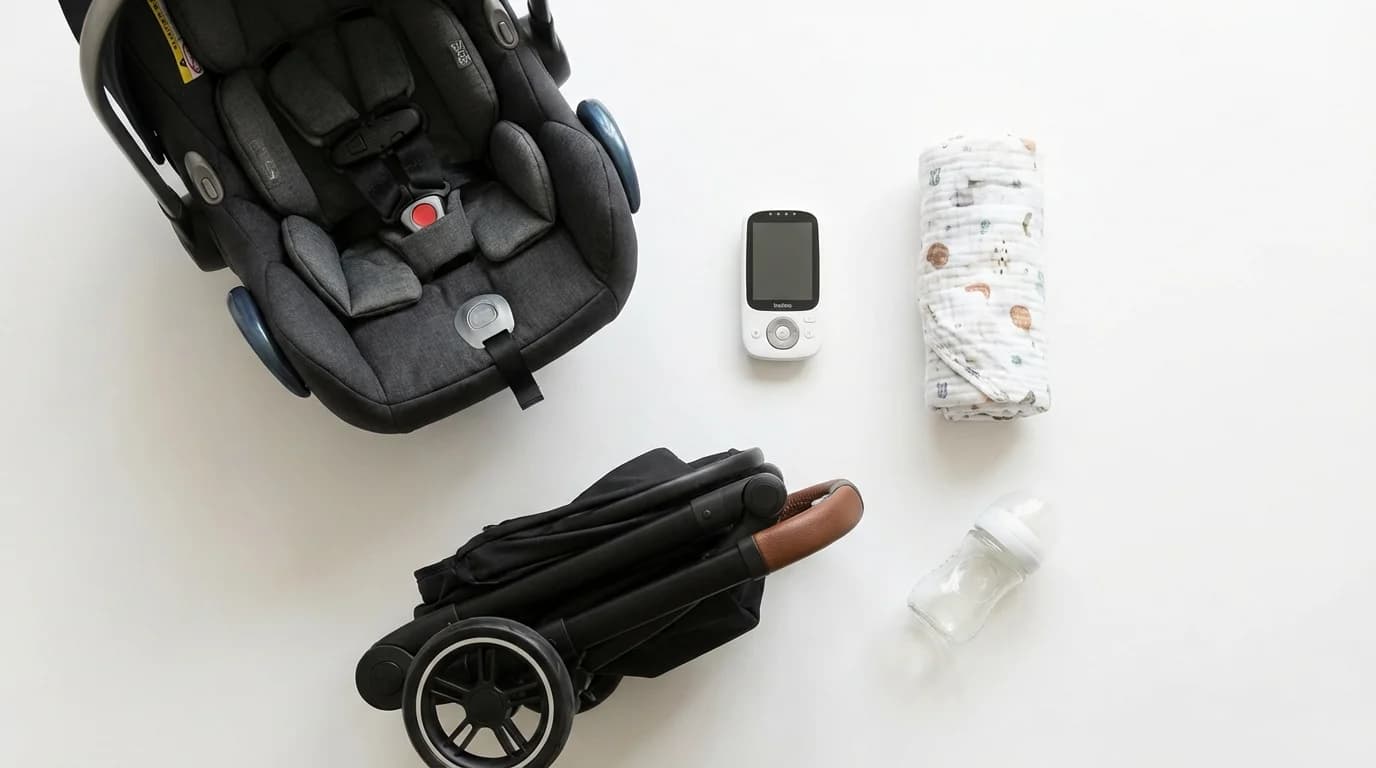
Car seats are the one piece of baby gear where safety is truly life-or-death, and every car seat sold in the US meets federal safety standards.
What actually matters: Not price — correct installation and proper fit for your child.
Start with our how to choose a car seat guide and browse our top car seat picks for specific recommendations.
NHTSA data shows that car seats reduce fatal injury risk by 71% for infants and 54% for toddlers aged 1-4 when used correctly. However, a 2023 NHTSA study found that 46% of car seats are installed incorrectly, underscoring the importance of professional installation checks.
Strollers are the gear you'll use most visibly and most often. Urban parents, suburban parents, and active parents all need different things. Our stroller buying guide helps you figure out which type fits your life, and our best strollers of 2026 covers every budget from $150 to $1,500. Planning to fly or road-trip? Don't miss our travel with baby guide for packing strategies and gear recommendations.
What bath gear does a baby really need?
Babies don't need daily baths — two to three times a week is plenty for infants. What they do need:
- Gentle, fragrance-free products
- A safe, supportive tub Our best bath time gear recommendations cover tubs, wash sets, and hooded towels for every stage.
Newborn skin is delicate, so we also recommend checking our picks for baby-safe cleaning products and gentle laundry detergent — what touches baby's skin and clothes matters as much as what goes in the tub.
What toys and play gear support healthy development?
Babies don't need a playroom full of expensive toys — and child development experts consistently emphasize that simple, open-ended play is more valuable than electronic gadgets. What babies do need in the early months:
- Supervised tummy timetummy timeSupervised awake time on the stomach — builds neck, back, and arm strength and prevents flat-head syndrome. Aim for a few minutes several times a day from day one. on a good play mat
- Age-appropriate sensory stimulation Our best baby gyms and play mats guide covers options from basic to feature-rich.
For parents returning to work, having the right baby carrier makes morning routines and daycare drop-offs smoother. Our going back to work after baby guide covers the gear and emotional preparation for that transition.
As baby grows, teething toys become essential — see our best teethers and teething remedies for safe, effective options. And for developmental play, our Baby Einstein toys roundup highlights toys that actually engage babies rather than just flashing lights.
Which reviews do parents find most helpful?
These are the posts our readers return to most — the guides that cover the gear decisions nearly every parent faces:
- Best Strollers of 2026 — our flagship stroller roundup, updated with the latest models
- Best Baby Monitors of 2026 — from budget video monitors to smart tracking systems
- Nanit vs Owlet — the definitive smart monitor comparison
- UPPAbaby VISTA vs Nuna MIXX — premium stroller head-to-head
- Newborn Essentials Checklist — exactly what to buy before baby arrives
- How to Build Your Baby Registry — a curated, no-fluff registry guide
- Baby Gear on a Budget — smart strategies for saving without sacrificing quality
- Best Convertible Car Seats — seats that grow with your child from infant to toddler
What monitoring and safety gear do you need?
A baby monitor gives you peace of mind during naps and nighttime. Whether you go with a simple video monitor or a smart system with sleep tracking depends on your anxiety level and budget. Our best baby monitors guide compares every major option.
The CDC reports that unintentional injuries are the leading cause of death for children ages 1-4 in the United States. Baby-proofing the home before the crawling stage (typically 6-8 months) significantly reduces the risk of falls, poisoning, and choking incidents.
Beyond monitoring, baby-proofing becomes critical around 6-8 months when crawling starts. Our baby-proofing checklist walks through every room, and our best baby gates for stairs covers the most important safety purchase for mobile babies.
How should you build your personalized gear list?
Feeling overwhelmed is normal — but you've got this. Start with the non-negotiables:
- Car seat
- Sleep space
- Feeding basics
- Diapers
Then add gear as you learn what your specific baby needs. Every family's essentials list looks a little different, and that's exactly how it should be.
For a structured approach to building your list, try our interactive parent planner — it walks you through your lifestyle and budget to generate a personalized gear checklist.
Use our baby gear on a budget guide if cost is a primary concern — it's packed with strategies for getting quality gear at lower prices, from timing sales to choosing the right items to buy secondhand.
Browse all our product categories to explore specific gear, or check the latest posts on our blog for new reviews and seasonal updates. Whatever path you take, we're here to help you gear up with confidence — not confusion.
Note: As an Amazon affiliate, we may earn from qualifying purchases. All recommendations are based on independent research and real parent feedback.
Research Sources
Hilly Shore Inc.
Editorial teamIndependent product research team behind Cribworthy. Reviews are grounded in published AAP / CDC / NHTSA / CPSC pediatric guidance, JPMA / GREENGUARD GOLD / OEKO-TEX certification verification, and aggregated buyer sentiment.
115 products reviewed · 20 categories covered · cites AAP, CDC, NHTSA, CPSC, FDA, ACOG.
Safety claims are verified against published pediatric guidelines and CPSC databases. See our editorial standards.